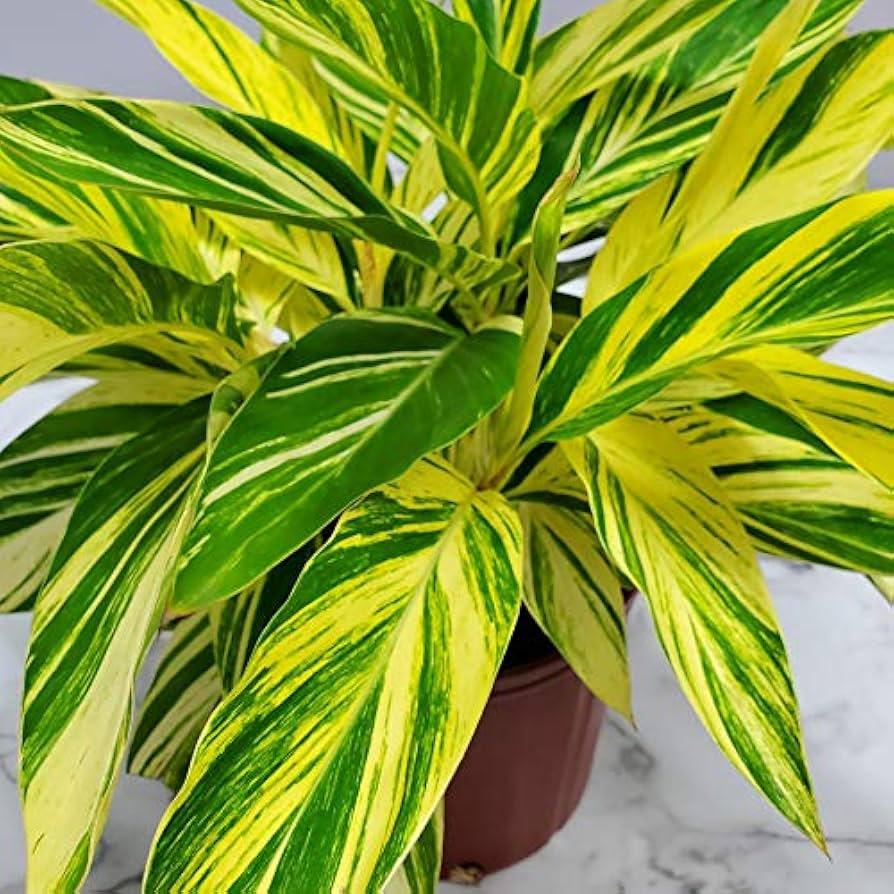


RedCrocus Variegated Ginger | Fragrant, Pollinator-Attracting Perennial for Garden & Containers | Partial Sun to Full Shade 10" Pot
RedCrocus Variegated Ginger | Fragrant, Pollinator-Attracting Perennial for Garden & Containers | Partial Sun to Full Shade 10" Pot
Regular price
$100.00 USD
Regular price
$130.00 USD
Sale price
$100.00 USD
Unit price
per
Shipping calculated at checkout.
SKU:ber3f91-redcrocus
Couldn't load pickup availability
Ginger Variegated
Description
This variegated ginger features lush green leaves with striking white margins, bringing tropical elegance to your garden. Its tall stems produce fragrant flowers that attract pollinators, making it both beautiful and functional.
Suggested Uses
Ideal for garden beds, borders, container planting, and tropical garden themes. It adds vibrant foliage and fragrant blooms, enhancing landscape diversity.
Plant Details
-
 Botanical Name: Ginger Variegated
 -
 Common Name: Variegated Ginger
 -
 Size & Growth: 3-4 ft tall, spreads up to 2 ft
 -
 Hardiness Zones: 8-11
 -
 Foliage Type: Perennial, Variegated
 -
 Bloom Time: Summer to Fall
 -
 Growth Rate: Moderate
 -
 Light Requirements: Partial Shade to Full Sun
 -
 Attracts Pollinators: Yes
 -
 Indoor Friendly: Yes
 -
 Container Friendly: Yes
 -
 Deer Resistant: Moderately
 -
 Pet Warning: Mildly Toxic if Ingested
 -
 Fragrant: Yes
 -
 Cut Flower: Yes
 -
 Grows Well With: Ferns, Peace Lilies
Care Tips
-
 Planting Instructions: Plant in well-drained soil, half in the ground or container.
 -
 Soil Moisture: Keep consistently moist, but not soggy.
 -
 Soil Type: Rich, Organic
 -
 Humidity: Prefers Humid Conditions
 -
 Pruning Instructions: Remove old stems to encourage new growth.
 -
 Winter Care: Mulch heavily in colder zones; indoor over winter if necessary.
 -
 Planting Depth: 2-3 inches deep
 -
 Fertilization: Feed with balanced fertilizer monthly during growing season.
 -
 Special Care: Maintain high humidity for optimal growth.