

RedCrocus Green Mountain Boxwood Topiary Cone – Buxus 'Green Mountain' Live Evergreen Shrub, Hardy in USDA Zones 4–9, Full Sun to Part Shade 2 Gallon Nursery Pot
RedCrocus Green Mountain Boxwood Topiary Cone – Buxus 'Green Mountain' Live Evergreen Shrub, Hardy in USDA Zones 4–9, Full Sun to Part Shade 2 Gallon Nursery Pot
Regular price
$260.00 USD
Regular price
$338.00 USD
Sale price
$260.00 USD
Unit price
per
Shipping calculated at checkout.
SKU:ber388e-redcrocus
Couldn't load pickup availability
Buxus Green Mountain Cone Cone
Evergreen Topiary • Formal Structure
A hardy, naturally pyramidal boxwood trained into a crisp cone for four‑season elegance.
Description
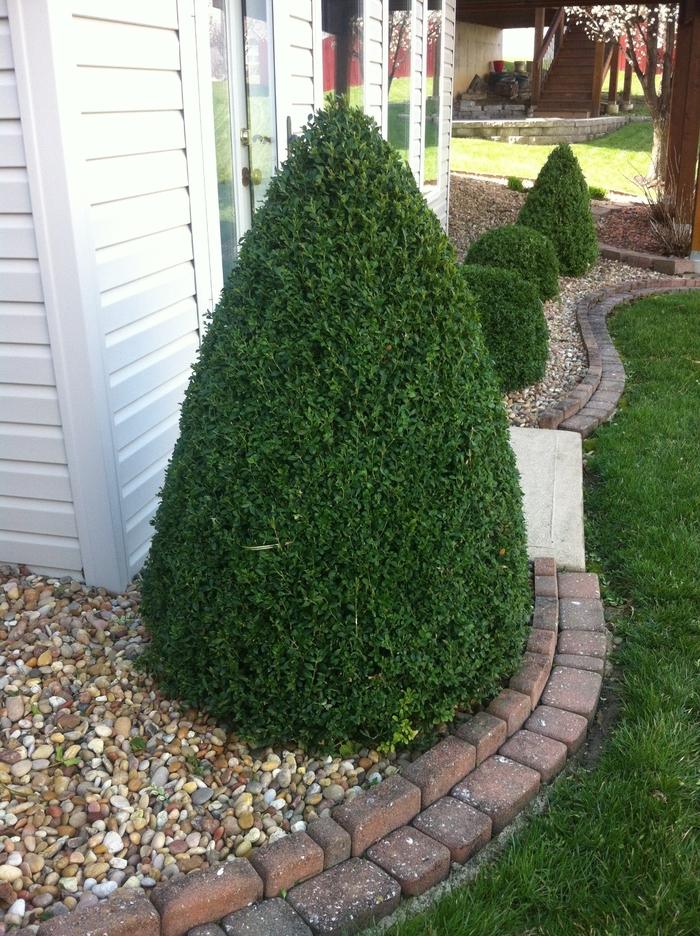
Buxus Green Mountain Cone Cone is a refined, cold‑hardy boxwood selected and trained into a tight, conical form. Its small, glossy evergreen leaves and naturally upright habit provide year‑round structure for entrances, patios, parterres, and formal beds. ‘Green Mountain’ holds rich green color through winter better than many boxwoods and accepts light shearing to maintain a sharp cone. Durable in a wide range of climates, it thrives in full sun to partial shade with evenly moist, well‑drained soils.
Plant Details
-
 Botanical NameBuxus Green Mountain Cone Cone
-
 Common NameBuxus Green Mountain Cone
-
 Size & GrowthTypically 5–7 ft tall × 2–4 ft wide at maturity; naturally pyramidal/conical; dense branching suitable for topiary.
-
 Hardiness ZonesUSDA Zones 4–9 (reliable cold hardiness; winter protection advised in exposed sites).
-
 Foliage TypeBroadleaf evergreen; small, glossy, rich green leaves that hold color well through winter, with possible light bronzing in wind/sun.
-
 Bloom TimeLate spring; tiny, inconspicuous greenish flowers (ornamentally insignificant).
-
 Growth RateSlow to medium (about 4–8 in / 10–20 cm per year under good conditions).
-
 Light RequirementsFull sun to partial shade; 4–6+ hours of sun ideal. In hot climates, afternoon shade reduces winter bronzing and stress.
-
 Attracts PollinatorsMinor—small spring blooms can attract bees and small pollinators briefly.
-
 Indoor FriendlyNot recommended as a long‑term houseplant; best outdoors. Can be displayed indoors short‑term (e.g., holiday topiary) with bright light and cool temps.
-
 Container FriendlyExcellent for containers and entry pots with sharp drainage; protect roots from extreme winter cold in colder zones.
-
 Deer ResistantYes—deer rarely browse boxwood. Rabbits may nibble young growth in some areas.
-
 Pet WarningToxic if ingested (leaves and stems contain alkaloids). Keep away from pets and livestock; ingestion may cause vomiting/diarrhea.
-
 FragrantNot noted for fragrance; flowers faintly scented. Foliage has the characteristic boxwood aroma.
-
 Cut FlowerFlowers not used for cuts; foliage is excellent for wreaths and floral arrangements.
-
 Grows Well WithGrows Well With Hydrangea, Helleborus, Heuchera, Hosta, Nepeta, Lavender, Salvia, Alliums, spring bulbs, Japanese maple, yew, and holly—plants preferring well‑drained soils.
Note: Specific size and performance vary with climate, soil, and care. Values above reflect typical outcomes for ‘Green Mountain’ boxwood topiary forms.
Care Tips
-
 Planting InstructionsPlant in spring or early fall. Dig a hole 2–3× the width of the root ball, roughen sides, and set the plant level with or slightly above grade. Backfill with native soil, water to settle, and mulch 2–3 in, keeping mulch 2–3 in off the stems. Space 2–4 ft apart depending on mature spread and airflow needs.
-
 Soil MoistureKeep evenly moist, especially the first 1–2 years. Water deeply when the top 1–2 in (2.5–5 cm) are dry. Avoid soggy conditions; drip or soaker irrigation is ideal.
-
 Soil TypeWell‑drained loam or sandy loam; pH neutral to slightly alkaline (about 6.5–7.5). In heavy clay, amend with compost and plant slightly high to improve drainage.
-
 HumidityAverage outdoor humidity is fine. Ensure good air circulation and avoid frequent overhead watering to reduce disease pressure (e.g., boxwood blight).
-
 Pruning InstructionsShear or clip lightly after the spring flush (late spring) to maintain a crisp cone; touch up mid‑summer if needed. Avoid heavy pruning in late summer/fall. Thin interiors slightly to improve airflow; always disinfect tools between plants.
-
 Winter CareWater deeply before the ground freezes and mulch 2–3 in. In windy or full‑sun exposures, use a burlap screen to reduce winter burn. Avoid late‑season nitrogen. Anti‑desiccant sprays can help in harsh winters.
-
 Planting DepthPosition the top of the root ball level with or 1–2 in (2.5–5 cm) above surrounding soil. Keep the root flare visible; do not bury the crown.
-
 FertilizationA light feeder. In early spring, apply a slow‑release balanced or low‑nitrogen shrub fertilizer per label, or top‑dress with 1–2 in compost. Maintain near‑neutral pH for best performance.
-
 Special CareMonitor for boxwood leafminer, psyllids, and spider mites. Watch for Volutella and boxwood blight; remove fallen leaves, water at soil level, and sanitize tools. For containers, ensure winter root protection and repot every 2–3 years.