

RedCrocus Green Mountain Boxwood Spiral Topiary, Live Evergreen Buxus, Hardy Zones 4–9, Ideal for Entryways, Containers, and Formal Gardens 15 Gallon Nursery Pot
RedCrocus Green Mountain Boxwood Spiral Topiary, Live Evergreen Buxus, Hardy Zones 4–9, Ideal for Entryways, Containers, and Formal Gardens 15 Gallon Nursery Pot
SKU:ber349e-redcrocus
Couldn't load pickup availability
Buxus Green Mountain- Topiary- 4-5' Spiral Topiary
Description
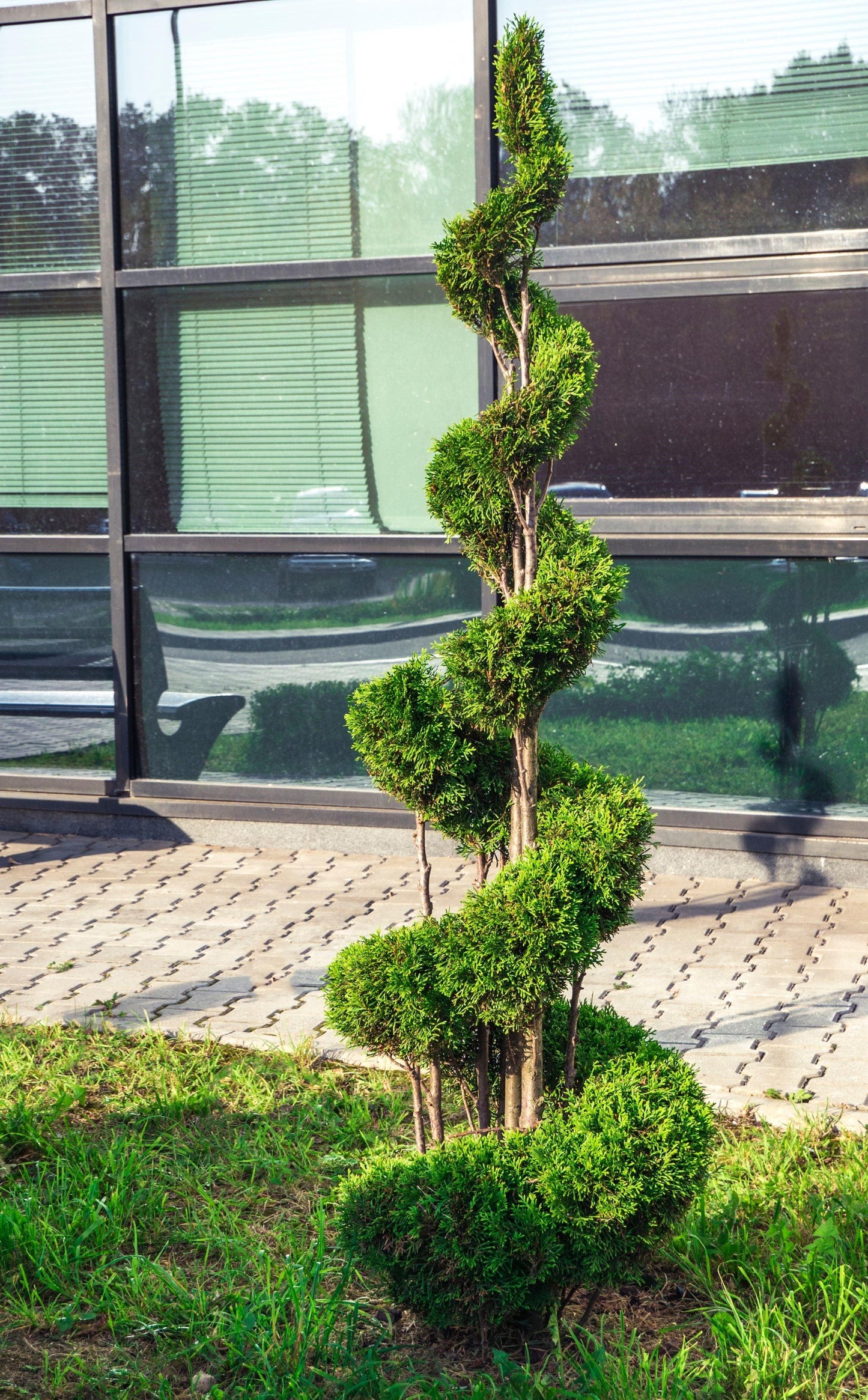
The ‘Green Mountain’ boxwood is a hardy, upright hybrid prized for its dense, fine-textured foliage and exceptional cold tolerance. Expertly trained into a 4–5 foot spiral, this topiary delivers instant architecture—perfect for framing entries, punctuating garden beds, or adding year-round structure to terraces and patios. Small, glossy leaves hold their rich green color through winter, and the plant responds beautifully to shearing for a crisp, formal silhouette.
Durable and adaptable, this topiary thrives in full sun to part shade with evenly moist, well-drained soil. With light seasonal pruning, it retains its elegant spiral and remains a standout focal point across all seasons.
Suggested Uses
- Flank doorways, gates, or pathways for a formal welcome.
- Anchor parterres, knot gardens, and classical or contemporary designs.
- Four-season container specimen on patios, terraces, and balconies.
- Evergreen focal point in mixed borders and foundation plantings.
- Pair as symmetrical accents or line up for rhythmic repetition.
- Underplant with seasonal color—spring bulbs, pansies, violas, or summer annuals.
Plant Details
-
 Botanical NameBuxus Green Mountain- Topiary- 4-5' Spiral Topiary
-
 Common NameBuxus Green Mountain- Topiary- 4-5'
-
 Size & GrowthMaintained at 4–5 ft tall, 20–30 in wide; naturally upright conical habit. Typical growth 3–6 in per year with good care.
-
 Hardiness ZonesUSDA Zones 4–9 (cold hardy; protect from harsh winter wind/sun in exposed sites).
-
 Foliage TypeEvergreen broadleaf; small, dense, glossy medium‑dark green leaves that hold color through winter.
-
 Bloom TimeSpring (often April–May); tiny yellow‑green flowers are inconspicuous and not grown for display.
-
 Growth RateSlow to moderate; approximately 3–6 inches per year depending on climate and care.
-
 Light RequirementsFull sun to part shade (4–6+ hours). Provide afternoon shade in hot-summer regions to prevent leaf scorch.
-
 Attracts PollinatorsLightly; spring blooms offer modest nectar and pollen for early bees and flies.
-
 Indoor FriendlyNot recommended long‑term indoors; can be displayed briefly in bright, cool conditions with good airflow.
-
 Container FriendlyExcellent in large containers (18–24 in+). Use well‑drained mix and protect roots from deep freezes in Zone 6 and colder.
-
 Deer ResistantYes—typically avoided by deer and rabbits (may browse in extreme scarcity).
-
 Pet WarningAll parts mildly toxic if ingested; can cause gastrointestinal upset. Discourage chewing by pets and livestock.
-
 FragrantFoliage has the characteristic boxwood scent, especially when warm or freshly pruned; flowers are faintly fragrant.
-
 Cut FlowerNot a cut flower, but sprigs provide long‑lasting evergreen foliage for wreaths and arrangements.
-
 Grows Well WithGrows Well With Hydrangea, Hosta, Heuchera, Ferns, Hellebores, Japanese Forest Grass, Roses, Lavender (well‑drained sites), bulbs and seasonal annuals.
Care Tips
-
 Planting InstructionsPlant in morning sun/afternoon shade if possible. Dig a hole 2–3× the width of the root ball, no deeper than the root ball height. Set straight, backfill with native soil, water thoroughly, and mulch 2–3 in (keep mulch off the stem).
-
 Soil MoistureKeep evenly moist, never waterlogged. Water deeply and allow the top 1–2 in of soil to dry slightly between waterings; containers may need more frequent checks in summer.
-
 Soil TypeWell‑drained loam or amended clay/sand. Ideal pH 6.5–7.5. Incorporate compost to improve structure and drainage; avoid persistently wet sites.
-
 HumidityAverage outdoor humidity is ideal. Ensure good air circulation; avoid frequent overhead watering late in the day to reduce disease pressure.
-
 Pruning InstructionsMaintain the spiral by light shearing 2–3× per season—after spring flush and again mid‑summer. Use clean, sharp shears; avoid heavy pruning after early August to prevent tender growth before frost.
-
 Winter CareWater deeply before the ground freezes. Apply 2–3 in mulch over the root zone. Shield from drying winds and strong winter sun with burlap screens in exposed locations. Protect container roots with insulation; avoid de‑icing salts nearby.
-
 Planting DepthSet with the root flare level with or 1–2 in above the surrounding soil. Do not bury the stem. In containers, keep the crown slightly above the potting mix surface for drainage.
-
 FertilizationFeed in early spring with a slow‑release, balanced fertilizer (e.g., 10‑10‑10) or a 1–2 in layer of compost. Avoid high nitrogen after midsummer. Supplement micronutrients if foliage pales in high‑pH soils.
-
 Special CarePractice sanitation to prevent boxwood blight (clean tools, remove debris). Monitor for leafminer, psyllid, and mites; treat promptly if needed. Water at soil level. Rotate container plants periodically for even sun; refresh top 2–3 in of potting mix annually.