

RedCrocus Euonymus 'Moonshadow' Live Plant – Variegated Evergreen Shrub, Wintercreeper, Sun/Part Shade, USDA Zones 5-9, Year-Round Color 1 Gallon Nursery Pot
RedCrocus Euonymus 'Moonshadow' Live Plant – Variegated Evergreen Shrub, Wintercreeper, Sun/Part Shade, USDA Zones 5-9, Year-Round Color 1 Gallon Nursery Pot
Regular price
$60.00 USD
Regular price
$78.00 USD
Sale price
$60.00 USD
Unit price
per
Shipping calculated at checkout.
SKU:ber2aa1-redcrocus
Couldn't load pickup availability
Euonymus Moonshadow
Evergreen, variegated foliage for year‑round color and dependable structure
Description
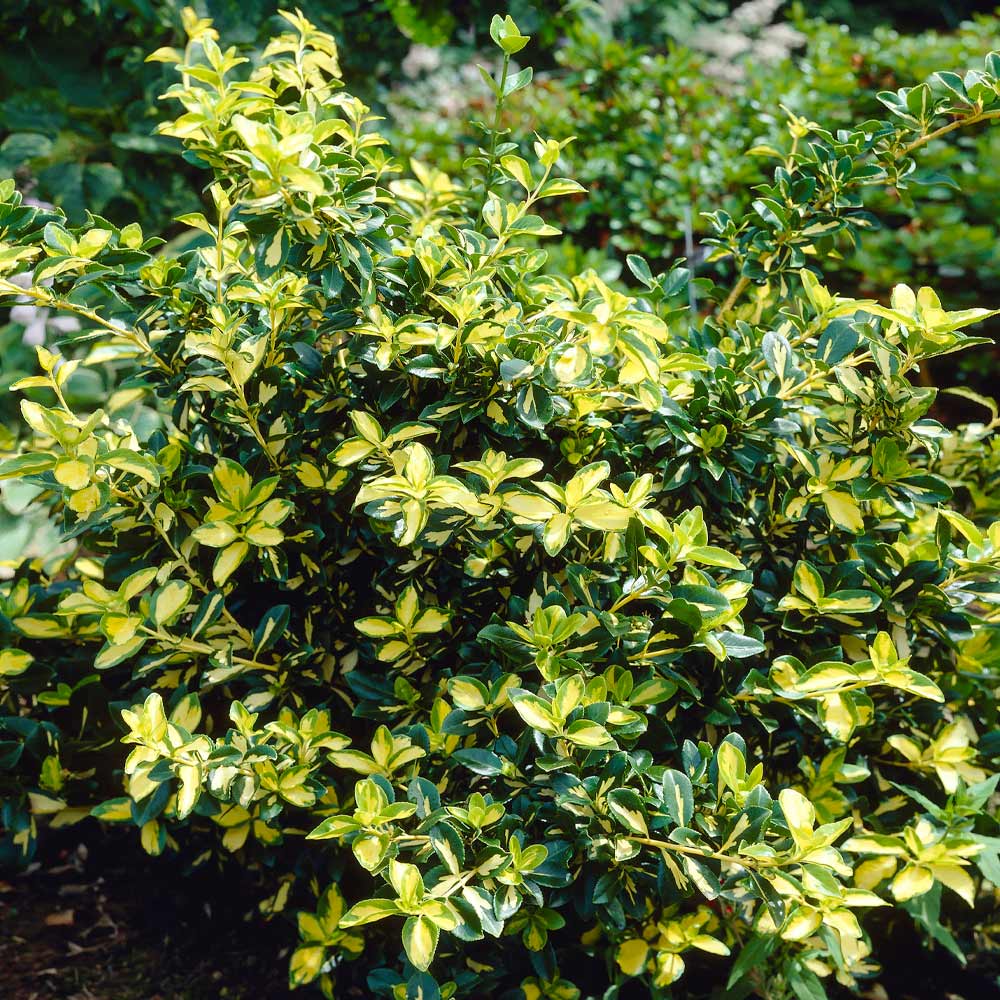
Euonymus Moonshadow is a compact, evergreen selection of wintercreeper prized for its glowing, variegated leaves—buttery yellow centers edged in deep green. It forms a tidy, mounding shrub that can be kept clipped as a low hedge, used to brighten mixed borders, or allowed to spill from containers. Adaptable to a wide range of soils and exposures, it tolerates pruning, urban conditions, and heat, holding color through the seasons. Given support, it can also climb modestly, but it is most often grown as a small shrub or groundcover accent.
Suggested Uses
Low hedge or edging
Foundation plantings
Mixed shrub borders
Slope/erosion control
Containers & troughs
Courtyards & patios
Topiary/clipped forms
Evergreen contrast in winter
Plant Details
-
 Botanical NameEuonymus fortunei 'Moonshadow' (often sold as Euonymus ‘Moonshadow’)
-
 Common NameEuonymus Moonshadow; Moonshadow Wintercreeper
-
 Size & GrowthTypically 2–3 ft tall × 3–5 ft wide; may climb to 6–8 ft if provided support. Forms a dense, mounding habit.
-
 Hardiness ZonesUSDA Zones 5–9 (reliably hardy with minimal winter protection in-ground).
-
 Foliage TypeEvergreen, glossy leaves with yellow centers and dark green margins; color holds year-round with best variegation in brighter light.
-
 Bloom TimeInsignificant greenish-white flowers in late spring to early summer; grown primarily for foliage effect.
-
 Growth RateModerate to fast, especially with regular moisture and light feeding in spring.
-
 Light RequirementsFull sun to partial shade; 4–6+ hours of sun enhances yellow variegation. Tolerates bright shade with slightly greener tones.
-
 Attracts PollinatorsLow; small flowers may draw occasional bees/flies but it is not a primary pollinator plant.
-
 Indoor FriendlyNot ideal as a long‑term houseplant; prefers outdoor conditions. Can be overwintered in a bright, cool spot if container-grown in cold climates.
-
 Container FriendlyExcellent in pots and troughs with good drainage; responds well to clipping for neat form on patios and entrances.
-
 Deer ResistantGenerally deer-resistant, though new growth may be sampled where pressure is high. Rabbits may nibble young shoots.
-
 Pet WarningAll parts can be toxic if ingested by pets or people (GI upset); avoid chewing and supervise pets. Wear gloves if sensitive skin.
-
 FragrantNo notable fragrance; valued for foliage rather than scent.
-
 Cut FlowerNot typically used for cut flowers; short vase life. Small foliage sprigs may be clipped for craft or holiday greens in a pinch.
-
 Grows Well WithGrows Well With Boxwood, dwarf conifers, Nandina, Spiraea, Berberis, Roses, Lavender, Salvia, Liriope, Hosta, Heuchera. Use to contrast purple, blue, or deep green foliage.
Care Tips
-
 Planting InstructionsPlant in spring or fall. Dig a hole 2× the root ball’s width and equal depth. Set crown level with soil line, backfill, water deeply, and mulch 2–3 in (keep mulch off stems).
-
 Soil MoistureKeep evenly moist the first growing season to establish. Once established, moderately drought tolerant; water during extended dry spells. Avoid waterlogged sites.
-
 Soil TypeAdaptable to clay, loam, or sandy soils that drain well; performs best in moderately fertile soil, pH 6.0–7.5 (tolerates slightly alkaline).
-
 HumidityAverage outdoor humidity is fine. Ensure good air circulation to reduce powdery mildew in humid regions.
-
 Pruning InstructionsShear or selectively prune in late winter to early spring; light touch-ups after spring flush are fine. Remove any all‑green reversions to maintain variegation; thin crowded stems for airflow.
-
 Winter CareHardy in Zones 5–9. Mulch roots in late fall. For containers, insulate pots or move to a sheltered spot to avoid freeze‑thaw stress and root heaving.
-
 Planting DepthSet the top of the root ball level with surrounding soil; do not bury the crown. Space 24–36 in apart for a dense border/hedge.
-
 FertilizationLight feeder. Apply a balanced, slow‑release fertilizer (e.g., 10‑10‑10 or organic equivalent) in early spring; avoid excessive nitrogen to preserve compact habit and leaf color.
-
 Special CareMonitor for euonymus scale; treat early with horticultural oil. Provide airflow to deter mildew. In some regions E. fortunei can spread—clip runners and avoid letting it climb trees. Excellent response to shaping for topiary and tight hedging.