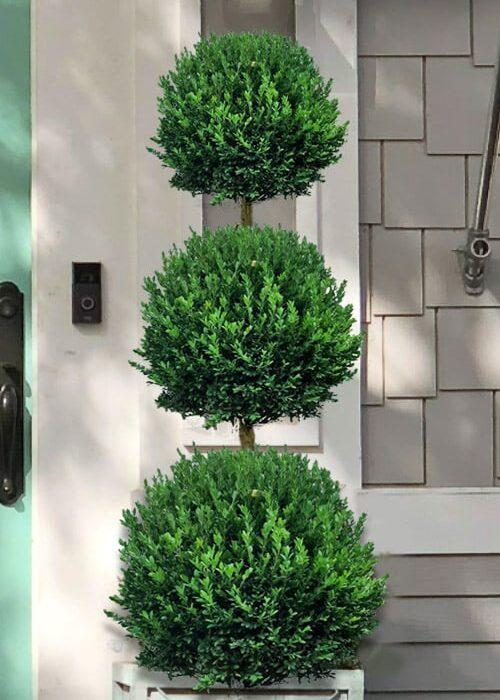


RedCrocus Green Mountain Boxwood Ball Topiary - Live Buxus for Containers, Entries & Formal Borders, Evergreen Structure, Low-Maintenance Garden Plant 7 Gallon Nursery Pot
RedCrocus Green Mountain Boxwood Ball Topiary - Live Buxus for Containers, Entries & Formal Borders, Evergreen Structure, Low-Maintenance Garden Plant 7 Gallon Nursery Pot
Regular price
$16.00 USD
Regular price
$20.80 USD
Sale price
$16.00 USD
Unit price
per
Shipping calculated at checkout.
SKU:ber27d8-redcrocus
Couldn't load pickup availability
Buxus Green Mountain- Topiary Ball Topiary
Formal, evergreen structure with a refined, clipped sphere that shines year-round
Broadleaf Evergreen
USDA Zones 4–9
Container & Topiary Friendly
Description
Buxus Green Mountain- Topiary Ball Topiary is a meticulously clipped form of the classic ‘Green Mountain’ boxwood, prized for its dense, fine-textured foliage and naturally upright habit that responds beautifully to shaping. The evergreen leaves hold a rich, medium-green tone through the seasons, lending structure and polish to gardens, entryways, and patio containers.
As a topiary ball, it provides instant architecture and symmetry. ‘Green Mountain’ is hardy, adaptable, and slower growing, which makes it easier to maintain a crisp, rounded silhouette with just a few touch-ups each season. Its small spring blooms are modest yet lightly fragrant and can attract the occasional pollinator.
Suggested Uses
- Flank entries, pathways, or gates for a formal welcome.
- Anchor patio containers and terrace planters year-round.
- Define parterres, knot gardens, and courtyard designs.
- Provide evergreen structure in mixed borders and foundation plantings.
- Pair with seasonal color in containers for four-season interest.
- Repeat along stairs or walls to create rhythm and symmetry.
- Underplant with bulbs or shade-tolerant perennials for layered effect.
Plant Details
Key Attributes

Botanical Name
Buxus Green Mountain- Topiary Ball Topiary

Common Name
Buxus Green Mountain- Topiary

Size & Growth
Typically 3–5 ft tall and 2–3 ft wide unpruned; as a clipped ball, commonly maintained at 12–24 in diameter. Slow–moderate, about 3–6 in of growth per year.

Hardiness Zones
USDA Zones 4–9; in colder/windy sites, provide winter wind protection to reduce burn.

Foliage Type
Broadleaf evergreen; small, dense, glossy medium-green leaves that hold color through winter.

Bloom Time
Late spring; inconspicuous, greenish-cream blooms.

Growth Rate
Slow to moderate; easy to maintain as a tight sphere with periodic shearing.

Light Requirements
Full sun to partial shade (4–6+ hours of light). In hot summers, afternoon shade helps prevent leaf scorch and winter burn.

Attracts Pollinators
Low; small spring flowers may draw occasional bees but it’s not a primary pollinator plant.

Indoor Friendly
Best outdoors. Can be displayed indoors briefly in bright, cool light; avoid warm, dry rooms and low light.

Container Friendly
Excellent for containers; choose a sturdy pot with large drainage holes and quality potting mix.

Deer Resistant
Yes; typically avoided by deer and rabbits.

Pet Warning
Toxic if ingested (dogs, cats, livestock). Keep prunings away from pets and supervise in landscaped areas.

Fragrant
Slightly fragrant spring blooms; foliage has a distinctive scent when warmed or pruned.

Cut Flower
Not grown for flowers, but the cut foliage is excellent, long-lasting greenery for arrangements.

Grows Well With
Hydrangea, roses, hellebores, heuchera, salvia, tulips, and other perennials that appreciate a structured evergreen backdrop.
Note: Attribute ranges reflect typical performance of the ‘Green Mountain’ boxwood topiary under average garden conditions.
Care Tips
Planting & Maintenance

Planting Instructions
Plant in spring or early fall. Dig a hole 2× the width of the root ball and the same depth; set the root flare level to slightly above surrounding soil. Backfill with native soil, water thoroughly to settle, and mulch 2–3 in, keeping mulch off the stem.

Soil Moisture
Keep evenly moist, especially the first year. Provide about 1 in of water per week; allow the top inch of soil to dry slightly between waterings. Avoid waterlogging.

Soil Type
Well-drained loam or sandy loam enriched with organic matter. Preferred pH is neutral to slightly alkaline (approx. 6.5–7.5); add lime if soil tests acidic.

Humidity
Average outdoor humidity is ideal. Provide good air circulation and shelter from drying winds, especially in winter.

Pruning Instructions
Shape after the spring flush; light touch-ups midseason as needed. Avoid heavy pruning in late summer. Thin a few interior sprigs annually to improve airflow. Always sanitize tools to reduce disease risk.

Winter Care
Water deeply before the ground freezes. Mulch the root zone; shield from harsh wind/sun (burlap screen) in exposed sites. Anti-desiccant sprays can help in windy Zone 4–5 settings. Protect container plants from freeze-thaw cycles.

Planting Depth
Set so the top of the root ball is even with or 1 in above the surrounding soil. Never bury the stem. In containers, keep the root flare visible and the soil 1–2 in below the rim for watering space.

Fertilization
Feed in early spring with a slow-release, balanced fertilizer formulated for evergreens. Avoid high-nitrogen spikes; cease fertilizing by midsummer. Soil test every 2–3 years and adjust pH with lime if needed.

Special Care
Monitor for boxwood leafminer, psyllid, mites, and boxwood blight. Water at the base (not overhead late day). Ensure sharp drainage—avoid “wet feet.” Repot container plants every 2–3 years. Rotate pots for even light and shape gradually when refining the sphere.
Tip: In hot climates, provide afternoon shade; in cold, prioritize wind protection and consistent soil moisture ahead of freezes.