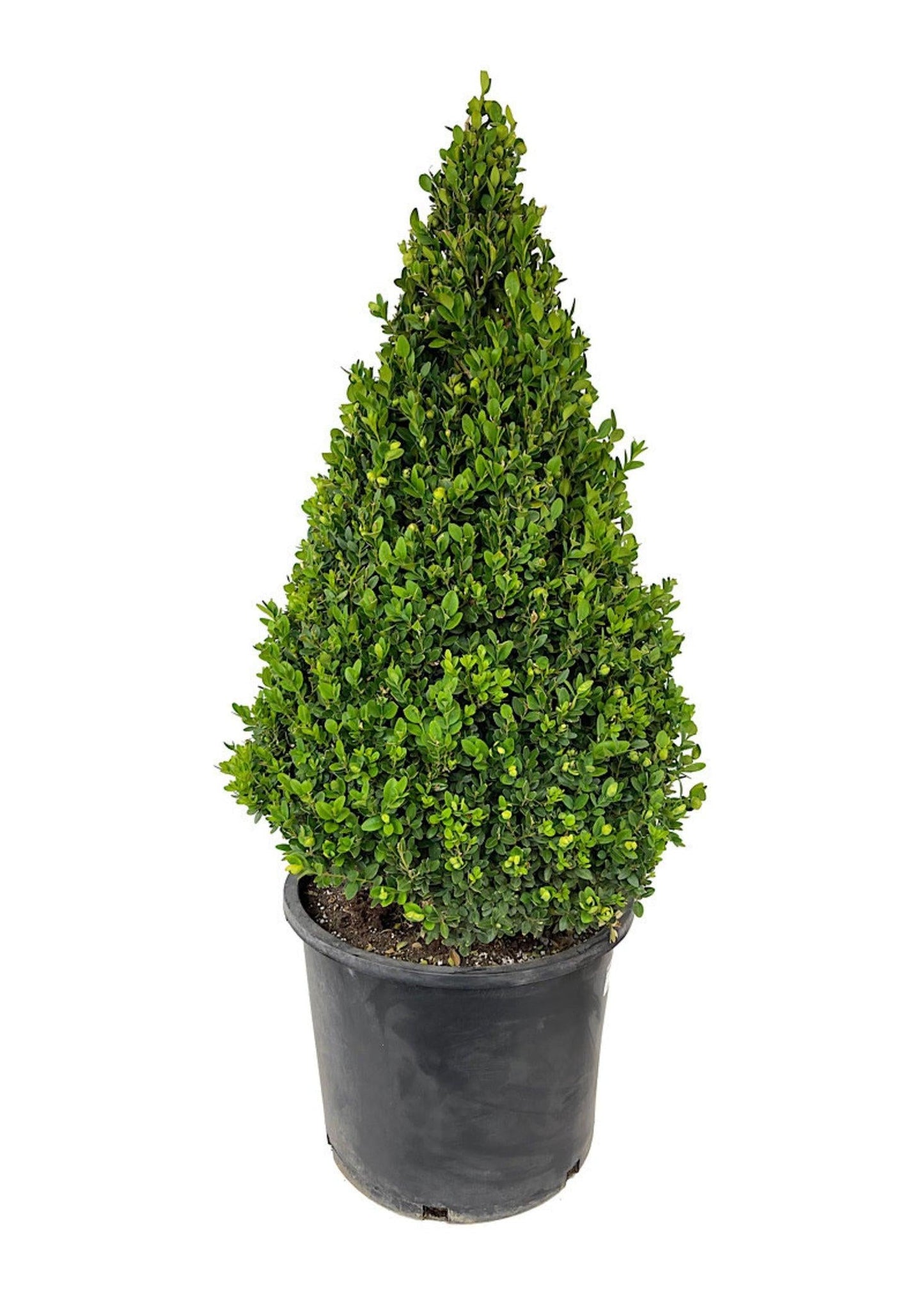


RedCrocus Picea abies 'Pusch' Topiary Standard (Grafted) – Dwarf Norway Spruce with Red Spring Cones, Live Evergreen Conifer 7 Gallon Nursery Pot
RedCrocus Picea abies 'Pusch' Topiary Standard (Grafted) – Dwarf Norway Spruce with Red Spring Cones, Live Evergreen Conifer 7 Gallon Nursery Pot
Regular price
$840.00 USD
Regular price
$1,092.00 USD
Sale price
$840.00 USD
Unit price
per
Shipping calculated at checkout.
SKU:ber27a9-redcrocus
Couldn't load pickup availability
Picea Pusch W/cones! Topiary Standard Topiary Sold Out
Sold Out
Dwarf Norway spruce trained as a standard—renowned for masses of glowing ruby-red spring cones and year-round evergreen structure.
Description
Picea abies ‘Pusch’ is a prized dwarf Norway spruce selected for its extraordinary display of brilliant raspberry-red juvenile cones each spring that age to tan and dangle decoratively through summer and winter. This listing represents a topiary standard: a compact, rounded “head” grafted atop a clear stem for a clean, architectural look that elevates the cones to eye level. The dense, finely textured needles hold a rich green through the seasons, offering year-round structure, subtle movement, and winter interest. Slow growing and reliably hardy, this elegant specimen is ideal for courtyards, entry containers, small gardens, and refined conifer collections.
Suggested Uses
- Statement container by doors or paths
- Small gardens & courtyards
- Rock, conifer, or alpine gardens
- Modern / Japanese-inspired designs
- Four-season structure & winter interest
- Rooftop and patio plantings
- Formal topiary accents
Plant Details
-
 Botanical NamePicea Pusch W/cones! Topiary Standard Topiary Sold Out
-
 Common NamePicea Pusch W/cones! Topiary
-
 Size & GrowthDwarf, slow-growing. Head typically 18–36 in wide in ~10 years; ultimate head 3–4 ft over time. Growth ~1–4 in per year. Overall height depends on graft (often 3–5+ ft initially), with the head slowly enlarging.
-
 Hardiness ZonesUSDA Zones 3–7; extremely cold-hardy once established.
-
 Foliage TypeEvergreen conifer; short, stiff, rich-green needles forming a dense, tidy crown.
-
 Bloom TimeShowy juvenile cones emerge vivid red in spring; mature to tan-brown and persist into winter (spruces are wind-pollinated and do not produce true “flowers”).
-
 Growth RateSlow and compact; ideal for long-term container culture and tight spaces.
-
 Light RequirementsFull sun to light shade; 6+ hrs sun promotes the strongest cone display.
-
 Attracts PollinatorsLow (wind‑pollinated); ripened seeds may draw birds; dense structure offers shelter for beneficials.
-
 Indoor FriendlyNot recommended indoors; requires outdoor sun, airflow, and winter chill for long-term health.
-
 Container FriendlyExcellent; thrives in large, well‑drained containers for many years. Repot or root-prune every 3–5 years.
-
 Deer ResistantModerate—often avoided, but may be browsed in severe pressure. Protect young plants if deer are active.
-
 Pet WarningNon‑toxic to pets; sharp needles and cones can cause minor mechanical irritation or choking—supervise curious animals.
-
 FragrantLow; subtle resinous scent when foliage is rubbed or on warm days.
-
 Cut FlowerCones and clipped sprigs are long‑lasting in wreaths and winter arrangements.
-
 Grows Well WithGrows Well With Dwarf conifers (Juniperus, Pinus mugo), heaths/heathers (Erica, Calluna), Heuchera, Sedum, dwarf ornamental grasses, spring bulbs.
Note: Actual head size and cone production vary with age, graft height, and growing conditions—full sun and good drainage yield the best show.
Care Tips
-
 Planting InstructionsSite in sun with excellent drainage. For in‑ground planting, dig a hole 2× the width of the root ball and equal depth. Set the root flare at or just above grade; keep the graft union above soil. Backfill with native soil; water to settle; stake the standard for the first 1–2 seasons. For containers, choose a pot with large drain holes, 2–3 in wider than current, and use a high‑quality, coarse, well‑draining mix.
-
 Soil MoistureKeep evenly moist but never soggy—water deeply, then allow the top 1–2 in of soil to dry. Increase frequency during hot, windy spells; reduce in cool seasons. Mulch 2–3 in deep, keeping mulch a couple inches off the trunk.
-
 Soil TypeWell‑drained loam or sandy loam; slightly acidic to neutral (pH ~5.5–7.0). Avoid heavy clay or standing water; amend for drainage if needed.
-
 HumidityAverage outdoor humidity is ideal. Tolerates dry air; ensure consistent soil moisture in containers during heat or drying winds.
-
 Pruning InstructionsMinimal pruning required. To refine the topiary, pinch back new “candles” by up to one‑third just after the spring flush. Remove dead or crossing twigs in late winter. Eliminate any shoots from the trunk below the graft. Spent cones may be removed for a tidier silhouette if desired.
-
 Winter CareFully hardy in‑ground within Zones 3–7. For containers, insulate the pot, cluster with others, or overwinter in a sheltered unheated space to protect roots. Provide a windbreak in exposed sites to limit winter desiccation; brush off heavy snow loads from the head.
-
 Planting DepthSet the root flare level with or 0.5–1 in above surrounding soil. Do not bury the trunk or graft. In containers, keep the crown slightly elevated to ensure rapid drainage away from the stem.
-
 FertilizationLight feeder. Apply a slow‑release, balanced, conifer‑friendly fertilizer in early spring (e.g., 5‑3‑2 to 10‑8‑6), following label rates. Do not fertilize after mid‑summer to avoid tender late growth.
-
 Special CareStake the standard while young to keep a straight trunk. Rotate container plants quarterly for even light. Monitor for spider mites, aphids, or sawfly larvae; treat promptly. Ensure good airflow to reduce needle cast risk. Maintain a 2–3 in mulch ring, kept back from the trunk.