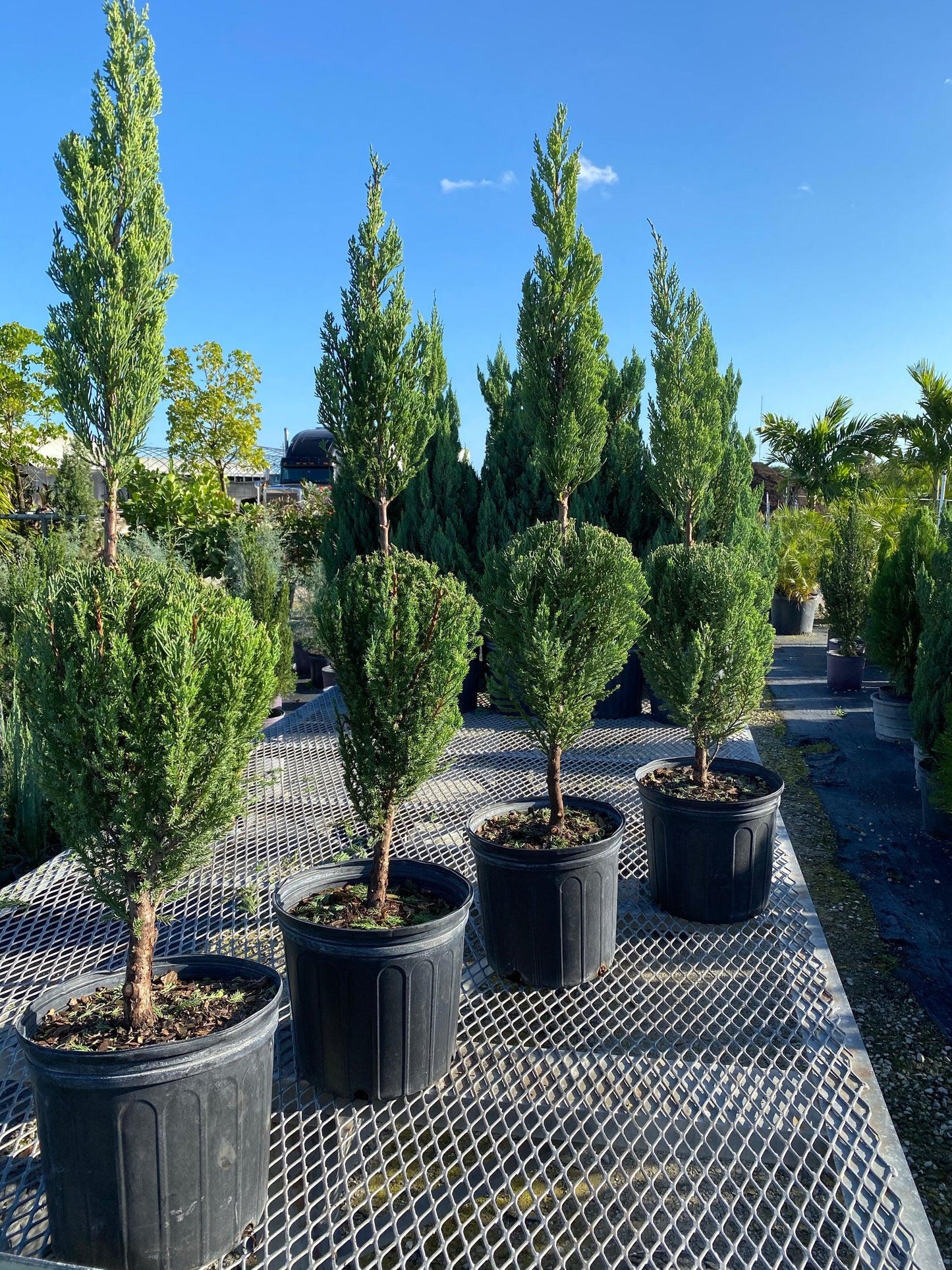


RedCrocus Blue Point Juniper Spiral Topiary – Live Evergreen Plant for Front Doors, Patios & Formal Gardens, Drought Tolerant, Year‑Round Color (USDA 4‑9) 10 Gallon Nursery Pot
RedCrocus Blue Point Juniper Spiral Topiary – Live Evergreen Plant for Front Doors, Patios & Formal Gardens, Drought Tolerant, Year‑Round Color (USDA 4‑9) 10 Gallon Nursery Pot
SKU:ber2676-redcrocus
Couldn't load pickup availability
Juniperus Blue Point- Topiary Spiral Topiary Sold Out
Description
Juniperus chinensis ‘Blue Point’ is a durable, evergreen juniper prized for its dense, blue‑green foliage and tidy, upright habit. In spiral topiary form, it delivers instant architectural impact—perfect for framing entries, anchoring beds, or elevating container displays. Tough, drought‑tolerant once established, and dependable across a wide range of climates, this topiary keeps its color and form all year. Fine, scale‑like foliage lends a refined texture; routine light shearing maintains the crisp spiral without demanding maintenance.
Botanical background: Juniperus chinensis ‘Blue Point’ (Chinese Juniper), trained into a spiral using selective shearing.
Suggested Uses
- Flank front doors or gates
- Formal and Mediterranean gardens
- Patio & courtyard containers
- Year‑round focal point
- Low‑water/xeric landscapes
- Japanese & contemporary styles
- Commercial frontage & streetscapes
- Holiday lighting and décor
Plant Details
-
 Botanical NameJuniperus Blue Point- Topiary Spiral Topiary Sold Out
-
 Common NameJuniperus Blue Point- Topiary
-
 Size & GrowthMaintained 5–8 ft tall, 2–3 ft wide as a spiral; unpruned form to 10–12 ft × 6–8 ft. Moderate vigor with 6–12 in new growth per year in full sun and good drainage.
-
 Hardiness ZonesUSDA 4–9. Heat and cold tolerant; protect container roots in colder zones during hard freezes.
-
 Foliage TypeEvergreen, dense, scale‑like foliage with cool blue‑green color; fine texture and naturally tidy habit.
-
 Bloom TimeNot grown for flowers. Inconspicuous pollen cones in spring; berry‑like cones may mature fall–winter on mature plants.
-
 Growth RateModerate. Responds well to light, regular shearing to maintain the spiral without heavy cuts.
-
 Light RequirementsFull sun (6+ hours). Tolerates light afternoon shade in hot summers; best color and density in full sun.
-
 Attracts PollinatorsNot a pollinator plant (wind‑pollinated). Provides cover and berry‑like cones that may benefit birds and wildlife.
-
 Indoor FriendlyNo. Requires full sun and outdoor winter chill; best grown outside year‑round.
-
 Container FriendlyYes. Thrives in large, well‑drained containers; choose heavy pots to resist wind and water consistently in heat.
-
 Deer ResistantGenerally deer resistant; browse is uncommon compared to many ornamentals.
-
 Pet WarningFoliage/berries can cause mild GI upset if ingested; prickly foliage may irritate skin. Supervise pets and children.
-
 FragrantSubtly resinous when brushed or cut; not a strongly scented ornamental.
-
 Cut FlowerNot used as cut flowers; clipped sprigs are excellent in wreaths and winter arrangements.
-
 Grows Well WithGrows Well With Sun‑loving, well‑drained companions: Lavender, Rosemary, Salvia, Nepeta, Sedum, Santolina, Artemisia, Blue Fescue, and dwarf yucca.
Care Tips
-
 Planting InstructionsPlant with the root flare at or just above grade. Dig a hole 2–3× the width of the root ball, same depth. Roughen sides, set plant straight, backfill with native soil (amend heavy clay to improve drainage), water to settle, and mulch 2–3 in, keeping mulch off the trunk.
-
 Soil MoistureKeep evenly moist the first growing season. Once established, water deeply but infrequently; allow the top few inches to dry between waterings. Containers dry faster—check often in summer.
-
 Soil TypeWell‑drained soils are essential—sandy loam to loam preferred. Avoid waterlogged sites; elevate or amend heavy clay. pH tolerance roughly 6.0–7.5.
-
 HumidityHandles dry air well. Ensure good air circulation; avoid prolonged leaf wetness to reduce disease pressure in humid climates.
-
 Pruning InstructionsShear lightly 2–3 times during the growing season to refine the spiral. Trim current season’s soft growth only—avoid cutting into old wood, as junipers rarely back‑bud. Maintain a single central leader for symmetry.
-
 Winter CareWater deeply before the ground freezes. In exposed, windy sites, burlap‑wrap the first winter to reduce desiccation. For containers, insulate the pot and elevate for drainage; shield from severe wind and road salt.
-
 Planting DepthSet so the top of the root ball is level with, or 0.5–1 in above, surrounding soil. Do not bury the trunk flare. In containers, keep the original soil line at the rim height to prevent rot.
-
 FertilizationLight feeder. In early spring, apply a slow‑release, balanced conifer fertilizer per label (avoid high‑nitrogen spikes). Do not fertilize late in the season. Containers: half‑strength balanced feed once monthly spring–mid‑summer if growth is pale or slow.
-
 Special CareRotate container specimens periodically for even sun. Refresh mulch annually (keep 2–3 in away from trunk). Monitor for spider mites, bagworms, and juniper blight; water at the base and ensure drainage to prevent root issues.
Quick Notes
Junipers prefer sun and drainage above all else. If in doubt, plant a bit high, water deeply but less often, and prune lightly and often rather than hard, infrequent cuts.