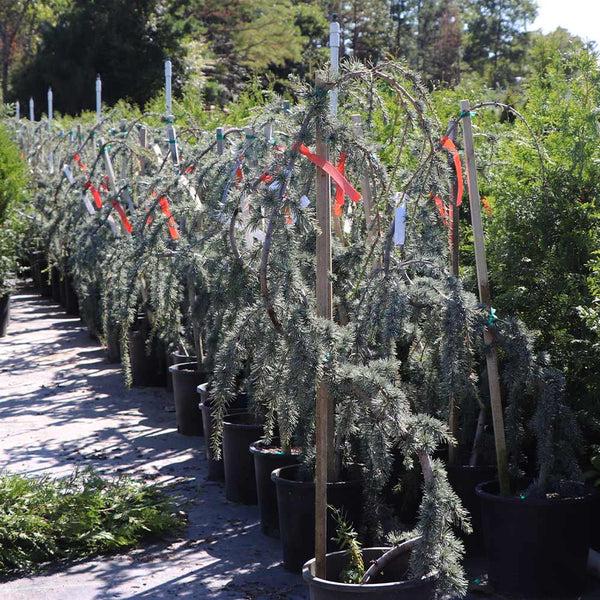


RedCrocus Weeping Blue Atlas Cedar - Cedrus atlantica 'Glauca Pendula' Serpentine Form, Live Evergreen Conifer for Landscapes 3 Gallon Nursery Pot
RedCrocus Weeping Blue Atlas Cedar - Cedrus atlantica 'Glauca Pendula' Serpentine Form, Live Evergreen Conifer for Landscapes 3 Gallon Nursery Pot
SKU:ber2368-redcrocus
Couldn't load pickup availability
Cedrus Atlantica Glauca Pendula- Serpintine Serpintine
 Full Sun
 USDA 6–9
 Slow–Moderate
 Evergreen Conifer
Description
The weeping blue Atlas cedar, trained in serpentine fashion, is a sculptural evergreen prized for its steel-blue needles and dramatic, cascading habit. Cedrus atlantica ‘Glauca Pendula’ is often staked and guided along a fence, wall, or rebar to create sinuous curves, then allowed to drape, forming a living piece of art. Its flexible young shoots make it ideal for creative training, while mature branches develop strong character and picturesque texture.
Once established, it tolerates heat and periodic drought, thriving in full sun and well-drained soils. The serpentine form is a standout specimen for modern and classic landscapes alike, from rock gardens to contemporary entryways.
Suggested Uses
- Statement specimen near entries
- Serpentine training along fences or walls
- Rock and gravel gardens
- Courtyards and modern landscapes
- Evergreen structure in mixed borders
- Large containers (youth/early years)
- Water-wise gardens once established
Care Tips
-
 Planting InstructionsPlant in a hole 2–3× wider than the root ball and the same depth; keep the root flare at or slightly above grade. Loosen circling roots. Position and stake a training rod or rebar to guide the leader in a serpentine path, tying new growth loosely with soft ties.
-
 Soil MoistureMaintain even moisture the first 1–2 years. Water deeply, then allow the top few inches to dry; avoid constantly wet or waterlogged soils. Once established, it is moderately drought tolerant with deep, infrequent watering.
-
 Soil TypeWell-drained loam or sandy soils; slightly acidic to neutral (pH ~6.0–7.5). In heavy clay, plant high and amend the backfill lightly with coarse grit and compost to improve drainage.
-
 HumidityHandles a wide range of outdoor humidity. Good air circulation is beneficial; thrives in dry-summer, Mediterranean, and temperate climates once established.
-
 Pruning InstructionsMinimal pruning required. In late winter, guide and tie the flexible leader to your support to maintain the serpentine path. Remove dead, damaged, or rubbing branches. Avoid shearing; make clean reduction cuts to preserve natural weeping character.
-
 Winter CareIn fall, water deeply before the ground freezes and apply a 2–3 in mulch layer, keeping mulch off the trunk. Shield young plants from desiccating winds; gently brush off heavy, wet snow to prevent breakage of pendant branches.
-
 Planting DepthSet so the top of the root ball is level with or 1–2 in above surrounding soil; ensure the root flare is visible and not buried to prevent decline.
-
 FertilizationA light feeder. If growth is weak or soil is poor, apply a balanced, slow-release conifer fertilizer in early spring. Avoid high-nitrogen spikes and do not fertilize after midsummer.
-
 Special CareTraining defines the shape: use sturdy, rust-resistant supports and re-tie annually as leaders extend. Ensure excellent drainage; overwatering invites root issues. Monitor for scale, aphids, and spider mites; treat promptly if detected.