

RedCrocus Goshiki False Holly (Osmanthus heterophyllus 'Goshiki') Live Plant – Variegated Evergreen Shrub, Fragrant Fall Blooms, Deer Resistant, Container & Hedge-Friendly 1 Gallon Nursery Pot
RedCrocus Goshiki False Holly (Osmanthus heterophyllus 'Goshiki') Live Plant – Variegated Evergreen Shrub, Fragrant Fall Blooms, Deer Resistant, Container & Hedge-Friendly 1 Gallon Nursery Pot
Regular price
$74.00 USD
Regular price
$96.20 USD
Sale price
$74.00 USD
Unit price
per
Shipping calculated at checkout.
SKU:ber1ba6-redcrocus
Couldn't load pickup availability
Osmanthus Goshiki Variegated False Holly
Description
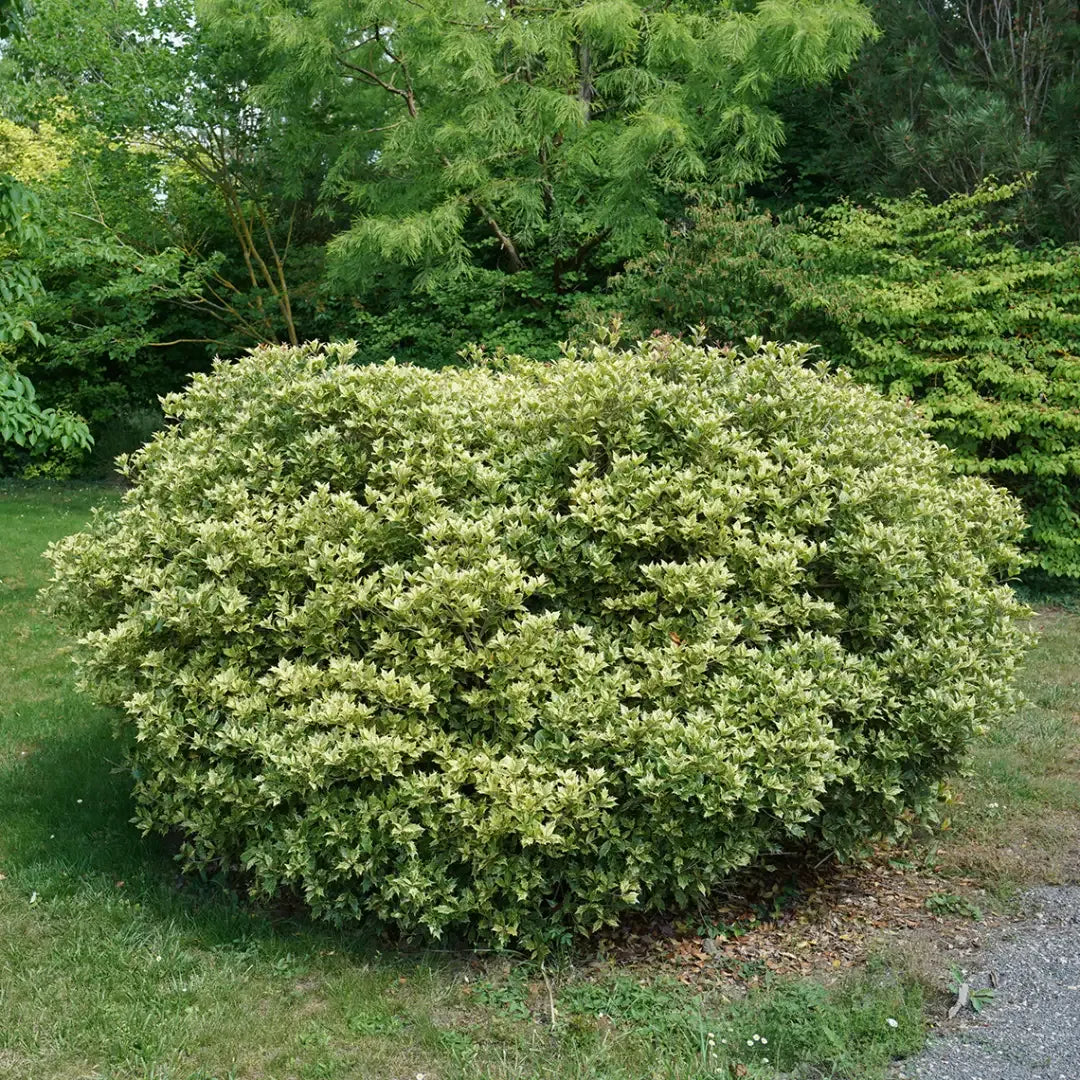
Dense, evergreen shrub prized for its multi-colored variegated foliage. New growth flushes pink to bronze and matures to a speckled mix of cream, yellow, and green. Leaves are holly-like and become less spiny with age. Small, white, fragrant flowers appear in fall; foliage is the main show.
Suggested Uses
Year-round color for foundation planting, mixed borders, low hedges, accent or specimen, woodland edges, and patio containers. Excellent for formal pruning or light hedging and for brightening part-shade sites.
Plant Details
-
 Botanical Name: Osmanthus heterophyllus 'Goshiki'
 -
 Common Name: Goshiki False Holly; Variegated False Holly
 -
 Size & Growth: 5–8 ft tall x 4–6 ft wide; naturally compact; slow to moderate growth
 -
 Hardiness Zones: USDA 6–9
 -
 Foliage Type: Evergreen, variegated, juvenile leaves spiny; older leaves less spiny
 -
 Bloom Time: Fall (often September–November); small white fragrant flowers
 -
 Growth Rate: Slow to moderate; very tidy habit with minimal shearing needed
 -
 Light Requirements: Full sun to part shade (best color with bright light; afternoon shade in hot summers)
 -
 Attracts Pollinators: Yes — fragrant fall flowers draw bees and other beneficials
 -
 Indoor Friendly: Not ideal as a houseplant; best grown outdoors (cool, bright sunroom short-term only)
 -
 Container Friendly: Yes — thrives in large containers with good drainage
 -
 Deer Resistant: Yes — generally avoided due to spiny foliage
 -
 Pet Warning: Generally regarded as non-toxic; spiny leaves may cause minor mouth or skin irritation if chewed/handled
 -
 Fragrant: Yes — subtly fragrant blooms in fall
 -
 Cut Flower: Foliage stems are excellent and long-lasting in arrangements
 -
 Grows Well With: Camellia, Pieris, Azalea/Rhododendron, Hellebore, Heuchera, Nandina, Japanese Maple
Care Tips
-
 Planting Instructions: Plant at the same depth as in the pot in a hole 2–3× as wide; backfill with native soil; water deeply to settle; mulch 2–3 in, keeping mulch off the stems.
 -
 Soil Moisture: Keep evenly moist but never waterlogged the first season; once established, moderately drought tolerant.
 -
 Soil Type: Adaptable; prefers well-drained, slightly acidic loam; tolerates clay if drainage is adequate.
 -
 Humidity: Average outdoor humidity; provide air flow to reduce leaf spot in very humid climates.
 -
 Pruning Instructions: Minimal pruning needed. Shape or hedge after flowering or in late winter/early spring. Promptly remove any all-green (non-variegated) shoots to preserve variegation.
 -
 Winter Care: Hardy in zones 6–9. Mulch roots in late fall; shield young plants from harsh winter winds/sun in exposed sites.
 -
 Planting Depth: Set the root flare at or just above soil grade; do not bury the crown; avoid piling mulch against stems.
 -
 Fertilization: In early spring, apply a balanced, slow-release fertilizer or compost. Avoid excessive nitrogen to maintain compact habit and strong variegation.
 -
 Special Care: Best color in bright light with some afternoon shade in hot climates. Water deeply during the first growing season. Site away from reflected heat and drying winds.