

RedCrocus Rhipsalis (Mistletoe Cactus) Live Trailing Succulent – Assorted Varieties for Hanging Baskets, Shelves and Wall Planters – Easy Care Indoor Houseplant 6" Hanging Basket
RedCrocus Rhipsalis (Mistletoe Cactus) Live Trailing Succulent – Assorted Varieties for Hanging Baskets, Shelves and Wall Planters – Easy Care Indoor Houseplant 6" Hanging Basket
Regular price
$70.00 USD
Regular price
$91.00 USD
Sale price
$70.00 USD
Unit price
per
Shipping calculated at checkout.
SKU:ber172a-redcrocus
Couldn't load pickup availability
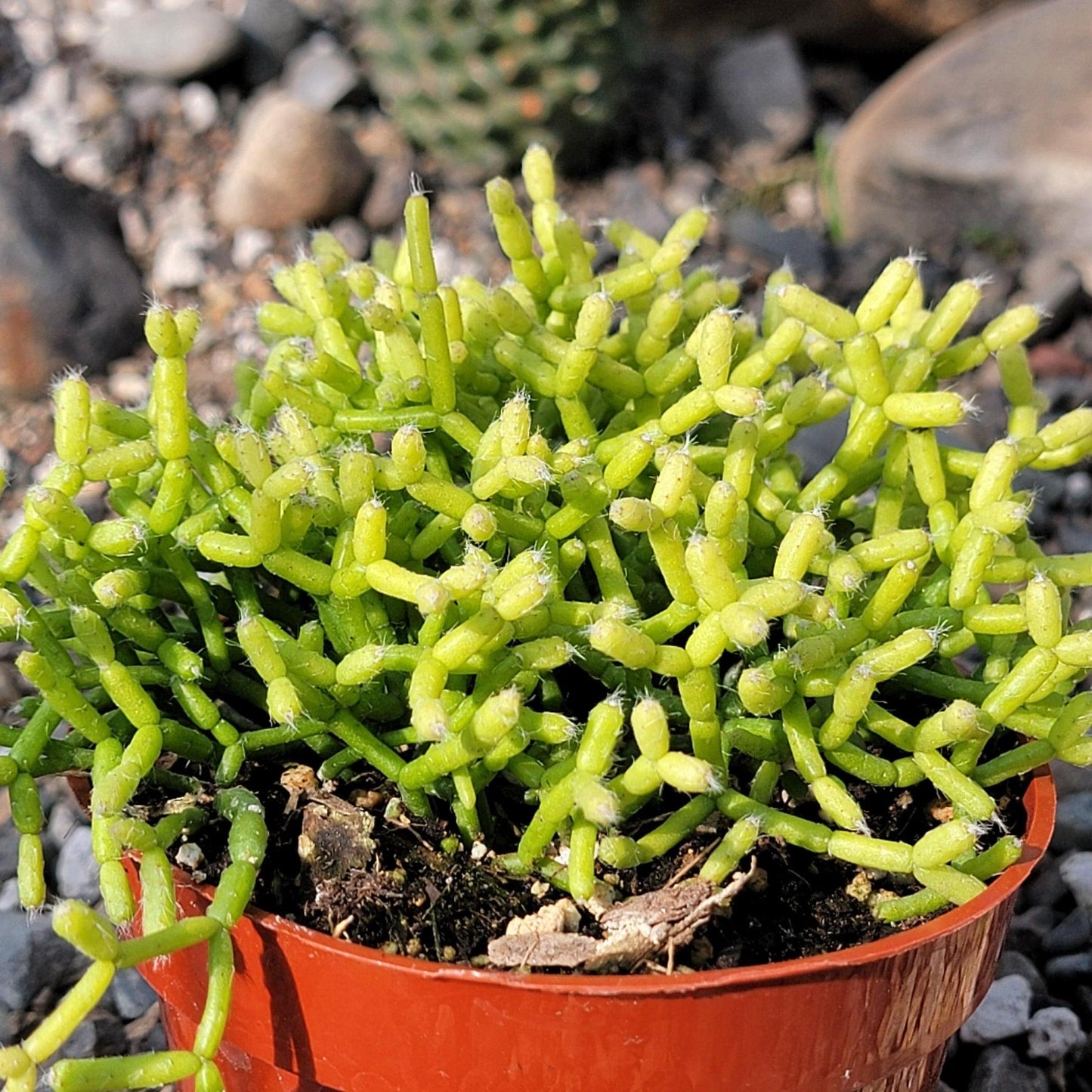
Succulent- Rhipsalis Assorted
A cascading, epiphytic “jungle cactus” with soft, pendant stems for bright, indirect light.
Indoor Friendly
Low Maintenance
Hanging Basket Star
Description
Rhipsalis, often called the mistletoe cactus, is an epiphytic, spineless succulent native to tropical forests where it grows on trees and rocks in dappled shade. Its thread-like or flattened stems spill gracefully, creating an airy, contemporary texture perfect for shelves and hanging planters.
Unlike desert cacti, Rhipsalis prefers bright, indirect light and evenly moist—but never soggy—soil during active growth. Small, starry white to cream flowers may appear seasonally, followed by ornamental translucent berries on some species. “Assorted” indicates a mix of species and forms; care needs are similar across the group.
Suggested Uses
-
 Hanging Baskets & Wall Pockets Show off its cascading habit in baskets, plant shelves, or wall planters.
 -
 Homes & Offices Thrives in bright rooms with indirect sun—ideal for desks, living rooms, and studios.
 -
 Bathrooms & Kitchens Enjoys moderate humidity; great choice for bright bathrooms or kitchens.
 -
 Mixed Plantings Pairs well with Hoya, Epiphyllum, Hatiora, Disocactus, and trailing Pothos.
Plant Details
-
 Botanical NameSucculent- Rhipsalis Assorted
-
 Common NameSucculent- Rhipsalis (Mistletoe Cactus)
-
 Size & GrowthTrailing length 12–36 in (30–90 cm) indoors; some forms can reach 4 ft+ over time. Mounding base typically 6–12 in tall.
-
 Hardiness ZonesUSDA 10–11 outdoors (frost-free). Grow as a houseplant elsewhere; protect below 50°F (10°C).
-
 Foliage TypeEvergreen, spineless, pendant stems (cylindrical or flattened segments); epiphytic cactus texture.
-
 Bloom TimeLate winter to spring (varies by species); small white/cream blooms followed by berry-like fruit on some types.
-
 Growth RateModerate indoors; faster with warmth, bright filtered light, and regular feeding.
-
 Light RequirementsBright, indirect light; morning sun is fine. Avoid harsh afternoon sun that can scorch stems. Tolerates medium light.
-
 Attracts PollinatorsFlowers may attract small pollinators outdoors; indoors, blooms are primarily ornamental.
-
Indoor FriendlyExcellent houseplant for bright rooms; adaptable and low-maintenance.
-
Container FriendlyIdeal for hanging baskets, shallow pots with drainage, and wall planters.
-
 Deer ResistantGenerally not favored by deer in warm climates; best grown as an indoor plant in most regions.
-
 Pet WarningGenerally non-toxic to cats and dogs; ingestion of large amounts may cause mild stomach upset.
-
 FragrantUsually not fragrant; any scent is faint and short-lived.
-
 Cut FlowerNot typically used as a cut flower; best appreciated as a living, cascading plant.
-
Grows Well WithGrows Well With Hoya, Epiphyllum, Hatiora, Disocactus, Tradescantia, and Pothos (Epipremnum).
Care Tips
-
 Planting InstructionsUse a pot with drainage. Fill with an airy cactus/epiphyte mix, set the plant at its original depth, and avoid burying stem segments. Water to settle and place in bright, indirect light.
-
 Soil MoistureWater when the top 1–2 in (2.5–5 cm) of mix is dry. Thoroughly moisten, then drain. Reduce in winter—never allow the pot to sit in water.
-
 Soil TypeA chunky, fast-draining blend: ~50% cactus soil + 25% orchid bark + 25% perlite/pumice. Slightly acidic to neutral (pH 5.5–6.5).
-
HumidityPrefers 40–60%+ relative humidity. Tolerant of typical homes; occasional misting or a nearby humidifier benefits growth.
-
 Pruning InstructionsTrim leggy or damaged stems in spring or after flowering to shape. Use clean shears; stem cuttings root readily for propagation.
-
 Winter CareKeep at 55–75°F (13–24°C), minimum 50°F (10°C). Provide the brightest light available and water sparingly. Avoid cold drafts and heat vents.
-
 Planting DepthSet crown level with the soil surface; cover roots just enough to secure the plant. Do not bury stem nodes deeply.
-
 FertilizationFeed monthly in spring–early fall with a balanced, diluted (½ strength) cactus/epiphyte fertilizer. Flush the pot with plain water every 2–3 months to prevent salt buildup.
-
 Special CareRotate for even growth; avoid intense midday sun. Inspect for mealybugs/scale. Shower foliage occasionally to remove dust. Repot every 2–3 years in spring once root-bound.
Tip: If stems yellow, reduce direct sun or adjust watering; if growth is sparse, increase light and humidity.