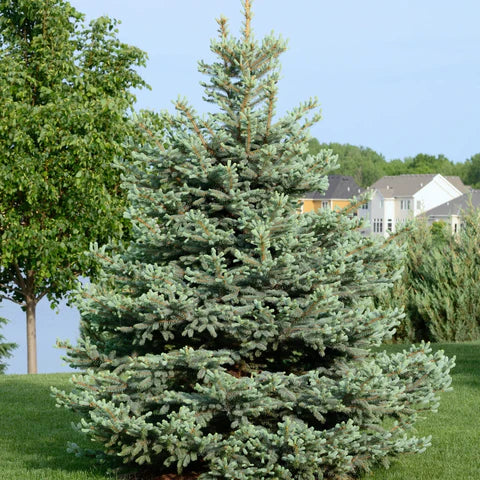


RedCrocus Baby Blue Spruce (Picea pungens) Live Evergreen Tree - Silver-Blue Needles, Cold-Hardy, Full Sun Landscape Specimen 1 Gallon Nursery Pot
RedCrocus Baby Blue Spruce (Picea pungens) Live Evergreen Tree - Silver-Blue Needles, Cold-Hardy, Full Sun Landscape Specimen 1 Gallon Nursery Pot
Regular price
$70.00 USD
Regular price
$91.00 USD
Sale price
$70.00 USD
Unit price
per
Shipping calculated at checkout.
SKU:ber151e-redcrocus
Couldn't load pickup availability
Picea Pungens Baby Blue Spruce
A compact, intensely blue selection of Colorado spruce with a naturally dense, conical habit.
Description
Picea pungens ‘Baby Blue’ is a refined Colorado blue spruce prized for its vivid, powdery-blue needles and uniform, pyramidal form. More compact than the species, it matures gracefully without heavy pruning, offering year-round color and structure. Extremely cold hardy and wind tolerant, it thrives in full sun and well-drained soil, performing beautifully as a specimen, anchor in mixed borders, or four-season focal point in landscapes across colder regions.
Suggested Uses
- Specimen / Focal Point
- Front Yard Accent
- Evergreen Structure
- Mixed Borders
- Foundation Planting (room to mature)
- Wind- and Cold-Exposed Sites
- Large Containers (juvenile years)
- Winter Interest
- Privacy Screening (informal)
Plant Details
-
 Botanical NamePicea pungens ‘Baby Blue’
-
 Common NamePicea Pungens Baby Blue Spruce
-
 Size & GrowthTypically 15–20 ft tall × 8–10 ft wide at maturity; dense, naturally pyramidal habit.
-
 Hardiness ZonesUSDA Zones 2–7 (best in cooler, low-humidity climates).
-
 Foliage TypeEvergreen conifer; stiff, prickly needles in striking silver-blue tones year-round.
-
 Bloom TimeNon-flowering; produces inconspicuous pollen cones in spring; seed cones mature late summer–fall.
-
 Growth RateSlow to moderate (about 6–12 inches per year under good conditions).
-
 Light RequirementsFull sun; aim for 6+ hours of direct light daily for best color and density.
-
 Attracts PollinatorsLow (wind-pollinated). Provides shelter/nesting for birds and beneficial wildlife.
-
 Indoor FriendlyNot suitable indoors; requires full sun and cold winter dormancy.
-
 Container FriendlyYes when young (large, well-drained containers); ultimately prefers in-ground planting.
-
 Deer ResistantGenerally deer resistant due to prickly needles and resinous taste.
-
 Pet WarningNon-toxic to cats/dogs; sharp needles and sap can irritate skin or cause mild GI upset if chewed.
-
 FragrantLightly resinous, piney scent when needles are crushed; not a fragrant bloomer.
-
 Cut FlowerNot used as cut flowers; attractive cut boughs for winter/holiday arrangements.
-
 Grows Well WithGrows Well With Juniperus, Pinus mugo, Potentilla (Dasiphora), Spiraea, Physocarpus, Hydrangea paniculata, Calamagrostis ‘Karl Foerster’, Festuca glauca, Sedum ‘Autumn Joy’.
Care Tips
Follow these guidelines to establish healthy, long-lived plants.
-
 Planting InstructionsPlant in spring or early fall. Dig a hole 2–3× the root ball width and equal depth. Set root flare at/just above grade, backfill with native soil, and water to settle. Remove or loosen burlap/wire from B&B root balls.
-
 Soil MoistureKeep evenly moist the first 1–2 growing seasons. Once established, moderately drought tolerant; avoid chronic wetness or standing water.
-
 Soil TypeWell-drained loam or sandy loam; slightly acidic to neutral pH (approx. 5.5–7.0). In heavy clay, plant on a berm/mound to improve drainage.
-
 HumidityPrefers low to moderate humidity with good air flow; avoid prolonged warm, humid conditions that encourage needle cast. Water at the base, not over the canopy.
-
 Pruning InstructionsMinimal pruning needed. Shape or tip back soft new growth in late spring; avoid cutting into old wood without buds. Remove dead/diseased branches in late winter.
-
 Winter CareWater deeply before ground freeze; apply 2–3 in. mulch, keeping it off the trunk. Shield young trees from drying winds/salt spray where necessary.
-
 Planting DepthSet so the top of the root ball is level with or slightly above surrounding soil; never bury the trunk flare.
-
 FertilizationLight feeder. If needed, apply a slow‑release, balanced, acid-forming fertilizer in early spring based on soil test results; avoid late-season nitrogen.
-
 Special CareEnsure full sun and airflow to reduce disease. Monitor for spruce spider mites, aphids, needle cast, and Cytospora canker. Maintain a grass‑free mulch ring and consistent watering during establishment.