

RedCrocus Little Giant Arborvitae (Thuja occidentalis) – Dwarf Globe Evergreen Shrub, Compact Rounded Form, Cold-Hardy Zones 3-7, Low Maintenance Landscape or Foundation Plant 4" Pot
RedCrocus Little Giant Arborvitae (Thuja occidentalis) – Dwarf Globe Evergreen Shrub, Compact Rounded Form, Cold-Hardy Zones 3-7, Low Maintenance Landscape or Foundation Plant 4" Pot
Regular price
$110.00 USD
Regular price
$143.00 USD
Sale price
$110.00 USD
Unit price
per
Shipping calculated at checkout.
SKU:ber1097-redcrocus
Couldn't load pickup availability
Thuja Occ. Little Giant Globe Shape
Evergreen • Dwarf Globe Arborvitae
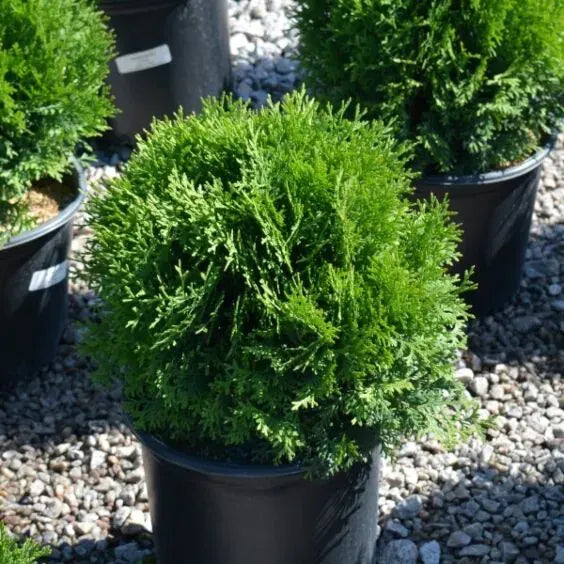
Compact, perfectly rounded arborvitae with dense, emerald-green foliage for year-round structure.
Description
Thuja Occ. Little Giant Globe Shape is a naturally mounded selection of American arborvitae prized for its tight, uniform globe habit and fine, scale-like evergreen foliage. Maturing slowly to a tidy ball without regular pruning, it provides dependable four-season structure in borders, foundation plantings, and containers. Its foliage remains rich green through the year, sometimes taking on a light bronze cast in the coldest winters. Hardy and adaptable, it thrives in full sun to part shade with even moisture, making it a low-maintenance architectural accent in both formal and casual designs.
Suggested Uses
- Foundation Plantings
- Formal Borders & Edging
- Rock & Alpine Gardens
- Entryway & Patio Containers
- Low Hedges or Parterre
- Mixed Shrub Beds
- Four-Season Structure
- Mass Plantings
Plant Details
-
 Botanical NameThuja Occ. Little Giant Globe Shape (Thuja occidentalis ‘Little Giant’)
-
 Common NameThuja Occ. Little Giant; Little Giant Arborvitae
-
 Size & GrowthTypically 3–4 ft tall and wide in 10 years; may slowly reach 4–5 ft. Naturally rounded, dense habit with fine texture.
-
 Hardiness ZonesUSDA Zones 3–7 (cold-hardy; performs best in cooler-summer regions).
-
 Foliage TypeEvergreen; scale-like sprays, rich green, slight bronzing possible in winter exposure.
-
 Bloom TimeNon-flowering ornamental; inconspicuous pollen/seed cones in spring.
-
 Growth RateSlow; about 2–4 inches of new growth per year under average conditions.
-
 Light RequirementsFull sun to part shade; 6+ hours sun ideal. In hot summers, provide light afternoon shade to reduce scorch.
-
 Attracts PollinatorsNo — wind-pollinated conifer; not a pollinator magnet.
-
 Indoor FriendlyNot suited for indoor culture; requires outdoor conditions and seasonal light cycles.
-
 Container FriendlyYes — excellent in large containers with drainage; repot or root-prune every 3–4 years.
-
 Deer ResistantNo — deer commonly browse arborvitae. Protect with fencing or repellents in deer-prone areas.
-
 Pet WarningFoliage contains aromatic oils (thujone); may cause GI upset if chewed. Supervise pets and avoid ingestion.
-
 FragrantSubtle resinous aroma when foliage is brushed or crushed; not a showy floral fragrance.
-
 Cut FlowerNot a cut flower; foliage can be used as long-lasting greenery in arrangements and wreaths.
-
 Grows Well WithGrows Well With Dwarf conifers (Juniperus ‘Blue Star’, Picea ‘Little Gem’), blue fescue, dwarf panicle hydrangeas, boxwood, heaths/heathers, compact spirea.
Care Tips
-
 Planting InstructionsDig a hole 2× the width of the root ball and the same depth. Loosen sides, set plant so root flare is at/just above grade, backfill with native soil, water thoroughly, and apply 2–3 in mulch (keep 2 in away from trunk).
-
 Soil MoistureKeep evenly moist, especially the first 1–2 growing seasons. Avoid chronic drought and waterlogged conditions.
-
 Soil TypeWell-drained loam, sandy loam, or amended clay; pH slightly acidic to neutral (approx. 6.0–7.5). Avoid high road salt exposure.
-
 HumidityAverage outdoor humidity. In exposed sites, protect from drying winds to reduce winter burn.
-
 Pruning InstructionsMinimal pruning needed. Lightly shear in late spring or early summer to maintain the globe. Do not cut into old brown wood; remove dead/broken twigs as needed.
-
 Winter CareDeeply water before ground freeze; maintain 2–3 in mulch. In windy or south-facing exposures, consider burlap windbreaks. Gently brush off heavy snow to prevent splaying.
-
 Planting DepthSet the top of the root ball level with surrounding soil; keep the trunk flare visible. Never bury the stem or mound soil over the crown.
-
 FertilizationIn early spring, apply a balanced, slow-release evergreen/conifer fertilizer per label. Alternatively, top-dress with compost. Avoid high-nitrogen feed after midsummer.
-
 Special CareSpace plants to allow airflow; water at the base to limit foliar disease. In deer areas, protect seasonally. For containers, ensure drainage holes and provide winter pot insulation in very cold climates.
Notes: Sizes, ultimate shape, and coloration can vary with climate, soil, and light. Provide consistent moisture and protection from extreme winter wind for best year-round appearance.