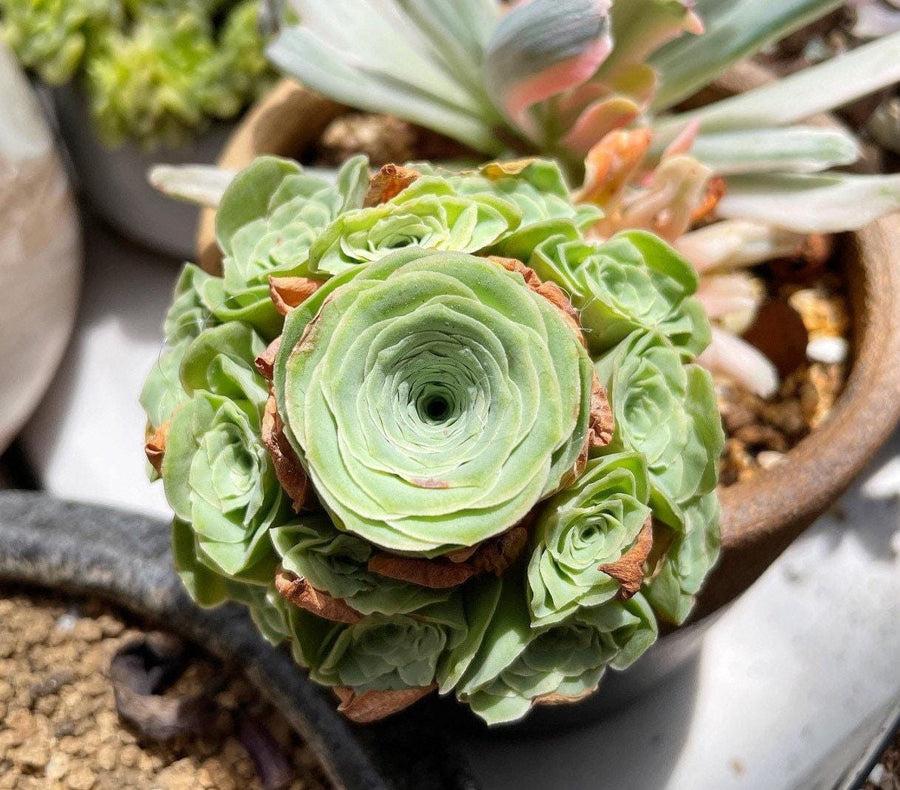


RedCrocus Aeonium Eucarie Rare Succulent- Rosette Foliage, Drought-Tolerant Container Plant, Indoor & Outdoor, Pet Safe, Vibrant Green with Purple Accents, Easy Care 4" Terracotta Pot (Pack of 2)
RedCrocus Aeonium Eucarie Rare Succulent- Rosette Foliage, Drought-Tolerant Container Plant, Indoor & Outdoor, Pet Safe, Vibrant Green with Purple Accents, Easy Care 4" Terracotta Pot (Pack of 2)
Regular price
$68.00 USD
Regular price
$88.40 USD
Sale price
$68.00 USD
Unit price
per
Shipping calculated at checkout.
SKU:ber1077-redcrocus
Couldn't load pickup availability
Succulent - Aeonium Eucarie - Rare
Description
A striking succulent featuring rosette-shaped leaves with rich green hues and subtle purple accents during cooler months. Its compact form makes it an excellent choice for containers and small gardens.
Suggested Uses
Ideal for rock gardens, container arrangements, xeriscaping, and as a focal point in succulent gardens. Suitable for both indoor and outdoor settings with proper care.
Plant Details
-
 Botanical Name: Aeonium Eucarie (Rare)
 -
 Common Name: Rare Aeonium
 -
 Size & Growth: Typically reaches 6-8 inches tall and wide, with slow to moderate growth.
 -
 Hardiness Zones: 9-11
 -
 Foliage Type: Rosette-forming succulent leaves
 -
 Bloom Time: Late winter to early spring
 -
 Growth Rate: Slow to moderate
 -
 Light Requirements: Bright, direct sunlight or partial shade
 -
 Attracts Pollinators: Yes, during flowering
 -
 Indoor Friendly: Yes; thrives in bright indoor light
 -
 Container Friendly: Perfect for pots and containers
 -
 Deer Resistant: Yes
 -
 Pet Warning: Mildly toxic if ingested
 -
 Fragrant: No
 -
 Cut Flower: No
 -
 Grows Well With: Other succulents and drought-tolerant plants
Care Tips
-
 Planting Instructions: Use well-draining cactus or succulent soil. Water sparingly, allowing soil to dry out between watering.
 -
 Soil Moisture: Well-draining with minimal moisture retention
 -
 Soil Type: Sandy or gritty, excellent drainage required
 -
 Humidity: Tolerates dry conditions, avoid excessive humidity
 -
 Pruning Instructions: Remove dead or damaged leaves to maintain shape
 -
 Winter Care: Protect from frost; bring indoors in colder climates
 -
 Planting Depth: Bury roots slightly below soil surface
 -
 Fertilization: Feed with cactus or succulent fertilizer during active growing season
 -
 Special Care: Avoid overwatering and ensure good air circulation