

RedCrocus Steeds Japanese Holly Live Plant (Ilex crenata 'Steeds') - Evergreen Upright Shrub for Hedges and Foundation Planting, Full Sun to Part Shade, Hardy Zones 5-8 10 Gallon Nursery Pot
RedCrocus Steeds Japanese Holly Live Plant (Ilex crenata 'Steeds') - Evergreen Upright Shrub for Hedges and Foundation Planting, Full Sun to Part Shade, Hardy Zones 5-8 10 Gallon Nursery Pot
Regular price
$740.00 USD
Regular price
$962.00 USD
Sale price
$740.00 USD
Unit price
per
Shipping calculated at checkout.
SKU:ber0f5a-redcrocus
Couldn't load pickup availability
Ilex Crenata 'steeds'
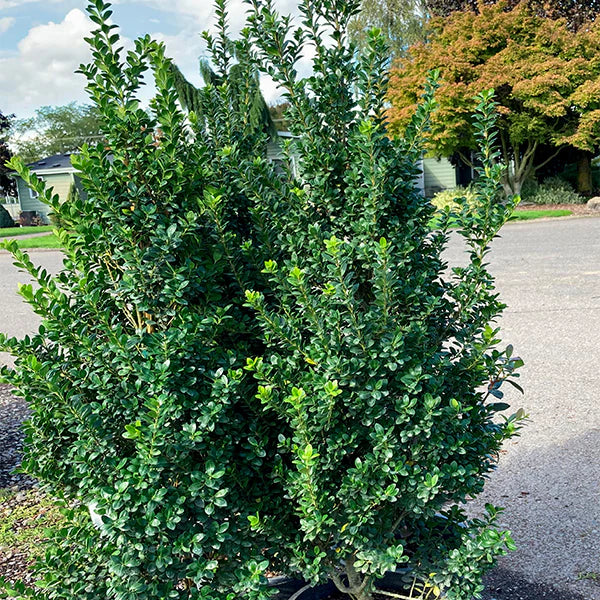
Steeds Japanese holly — a refined, upright, evergreen for hedges, structure, and year‑round texture
Description
Ilex crenata ‘Steeds’ is an elegant, upright Japanese holly prized for its naturally pyramidal form, dense branching, and small, glossy, dark-green leaves that hold color beautifully through winter. It’s an excellent alternative to boxwood where boxwood blight or leafminer are concerns, offering similar fine texture with superior year-round reliability. Discreet spring flowers may attract pollinators; fruiting is uncommon on this cultivar. Ideal for low-maintenance hedges, clipped forms, or as a structural accent in contemporary and classic landscapes alike.
Suggested Uses
Versatile in design, ‘Steeds’ excels as:
Plant Details
-
 Botanical NameIlex Crenata 'steeds'
-
 Common NameIlex Crenata 'steeds' (often sold as ‘Steeds’ Japanese holly)
-
 Size & GrowthTypically 6–8 ft tall x 3–4 ft wide; upright pyramidal habit; can reach 8–10 ft over time with favorable conditions.
-
 Hardiness ZonesUSDA Zones 5–8 (protect from harsh winter winds in exposed sites).
-
 Foliage TypeEvergreen; fine-textured, small, glossy, dark green leaves that retain color through winter with minimal bronzing.
-
 Bloom TimeLate spring (inconspicuous white flowers); fruiting is rare on this cultivar and requires a compatible mate.
-
 Growth RateModerate; about 6–10 inches per year under good conditions.
-
 Light RequirementsFull sun to part shade; best density with 4–6+ hours of sun. Tolerates bright dappled shade with slightly looser habit.
-
 Attracts PollinatorsYes—spring blossoms can attract bees and small beneficial insects, though flowers are subtle.
-
 Indoor FriendlyNo; best grown outdoors. Short-term indoor display possible if kept cool and bright, then returned outside promptly.
-
 Container FriendlyYes—performs well in large, well-drained containers; protect roots in winter in colder zones (insulate or heel in).
-
 Deer ResistantGenerally deer resistant; browsing is uncommon but may occur when food is scarce. Not deer-proof.
-
 Pet WarningMildly toxic if ingested (leaves/berries). Plant where pets and children will not chew; ‘Steeds’ seldom fruits but use caution.
-
 FragrantNot notably fragrant; flowers are small and discreet with minimal scent outdoors.
-
 Cut FlowerPrimarily valued for evergreen foliage—use stems in winter arrangements and wreaths for structure and texture.
-
 Grows Well WithGrows Well With Boxwood alternatives, azalea, rhododendron, pieris, hydrangea (H. serrata/macrophylla), heuchera, hosta, fern, hellebore, Japanese forest grass.
Care Tips
-
 Planting InstructionsPlant in spring or early fall. Dig a hole 2–3× the width of the root ball and just as deep. Set with the root flare level to slightly above grade; tease circling roots; backfill with native soil; water to settle; mulch 2–3 inches, keeping mulch off the trunk.
-
 Soil MoistureEvenly moist but well drained. Keep consistently moist the first growing season; once established, tolerates brief dry periods but avoid soggy soils.
-
 Soil TypePrefers acidic, loamy, well-drained soils (target pH ~5.0–6.5). Alkaline soils can cause chlorosis; amend with organic matter if heavy or compacted.
-
 HumidityAverage outdoor humidity is fine. Provide good air circulation; in winter, protect from desiccating winds in exposed locations.
-
 Pruning InstructionsMinimal pruning needed to maintain shape. Lightly shear or tip-prune in late winter to early spring; a light summer touch-up is fine. Avoid hard pruning late in the season to prevent tender growth before frost.
-
 Winter CareMulch root zone each fall; water deeply before ground freeze in dry autumns. In windy sites, consider a burlap windbreak. Container plants: insulate pots or overwinter in a sheltered, unheated area to protect roots.
-
 Planting DepthSet the crown/root flare at or slightly above surrounding soil. Do not bury the trunk or mound soil against the stem; maintain original container depth.
-
 FertilizationFeed in early spring with a slow-release, balanced fertilizer formulated for acid-loving evergreens. Follow soil-test guidance; avoid over-fertilizing late in the season.
-
 Special CareIf leaves yellow in alkaline soils, apply chelated iron and lower pH gradually. Monitor for scale and spider mites during hot, dry spells; hose off foliage periodically and encourage beneficial insects. Ensure excellent drainage—avoid sites with standing water.