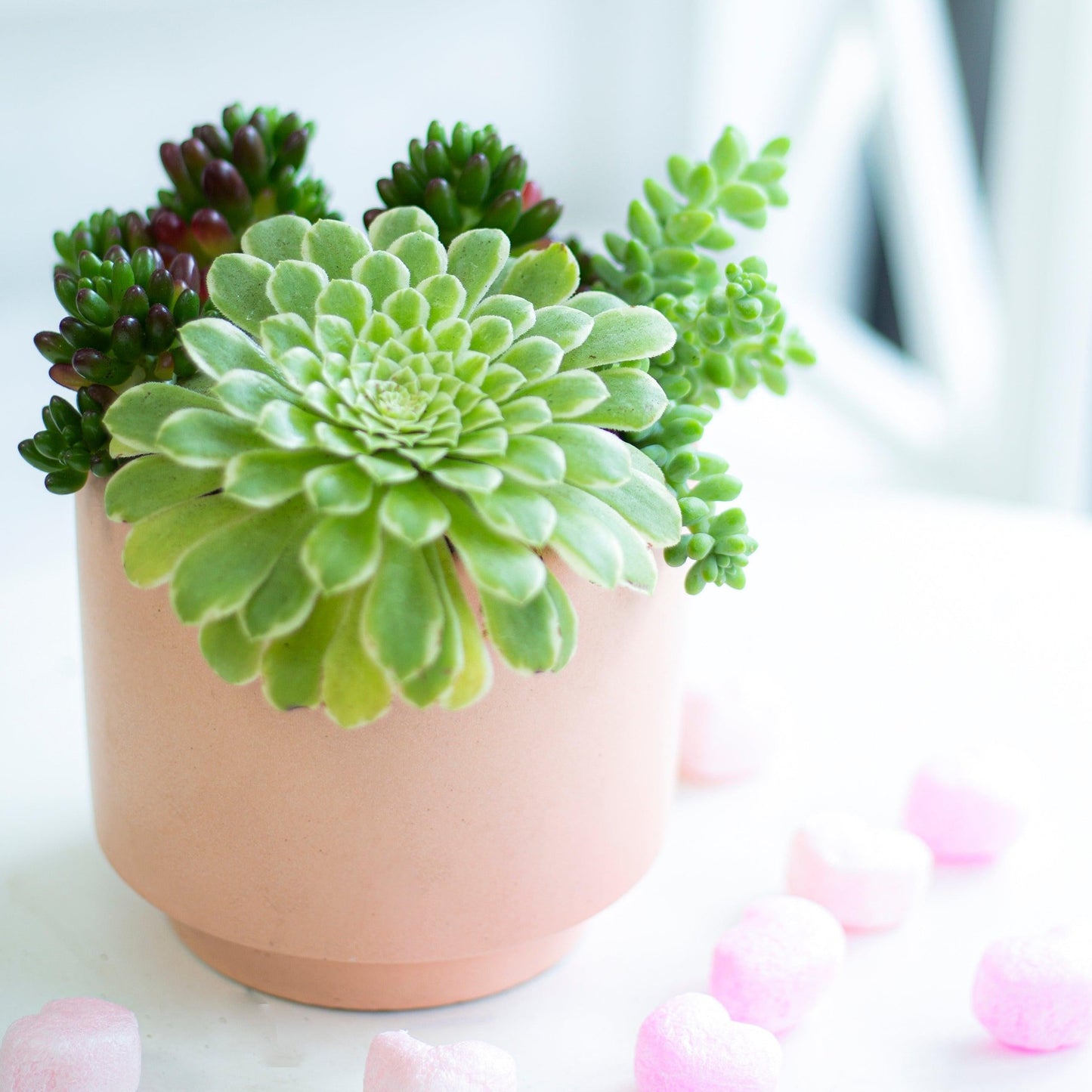


RedCrocus Aeonium Emerald Succulent- Green & White Variegation, Easy Care Indoor/Outdoor Plant, Pet-Friendly, Perfect for Containers & Rock Gardens 5" Terracotta Pot
RedCrocus Aeonium Emerald Succulent- Green & White Variegation, Easy Care Indoor/Outdoor Plant, Pet-Friendly, Perfect for Containers & Rock Gardens 5" Terracotta Pot
Regular price
$100.00 USD
Regular price
$130.00 USD
Sale price
$100.00 USD
Unit price
per
Shipping calculated at checkout.
SKU:ber0876-redcrocus
Couldn't load pickup availability
Succulent- Aeonium Green/white Emerald - Rare
Description
An eye-catching succulent with vibrant green and white variegated rosettes, showcasing a unique pattern and compact growth habit. Ideal for adding a touch of elegance to your garden or indoor space.
Suggested Uses
Perfect for rock gardens, container displays, indoor terrariums, and low-maintenance landscape designs. Its striking appearance makes it a focal point in any arrangement.
Plant Details
-
 Botanical Name: Succulent - Aeonium Green/white Emerald - Rare
 -
 Common Name: Aeonium Emerald
 -
 Size & Growth: Typically reaches 6-12 inches in height with a spreading rosette form
 -
 Hardiness Zones: 9-11
 -
 Foliage Type: Evergreen, Rosette-forming
 -
 Bloom Time: Spring to early summer
 -
 Growth Rate: Slow to Moderate
 -
 Light Requirements: Bright, direct sunlight preferred
 -
 Attracts Pollinators: Yes
 -
 Indoor Friendly: Yes, thrives in bright indoor conditions
 -
 Container Friendly: Ideal for pots and containers
 -
 Deer Resistant: Yes
 -
 Pet Warning: Non-toxic to cats and dogs
 -
 Fragrant: No
 -
 Cut Flower: Suitable for floral arrangements
 -
 Grows Well With: Other succulents, sedums, cacti
Care Tips
-
 Planting Instructions: Use well-draining cactus or succulent soil; avoid overwatering
 -
 Soil Moisture: Let soil dry out completely between waterings
 -
 Soil Type: Sandy, gritty, well-draining
 -
 Pruning Instructions: Remove dead or damaged leaves; pinch tips to encourage bushiness
 -
 Winter Care: Provide protection from frost; indoor placement recommended in colder climates
 -
 Planting Depth: 1-2 inches below soil surface
 -
 Fertilization: Use cactus or succulent fertilizer during active growth
 -
 Special Care: Avoid overwatering; provide plenty of sunlight for optimal health
 Humidity: Low to moderate