

RedCrocus Alocasia Hilo Beauty Live Plant - Variegated Elephant Ear Houseplant for Bright, Indirect Light 6"
RedCrocus Alocasia Hilo Beauty Live Plant - Variegated Elephant Ear Houseplant for Bright, Indirect Light 6"
Regular price
$54.00 USD
Regular price
$70.20 USD
Sale price
$54.00 USD
Unit price
per
Shipping calculated at checkout.
SKU:ber0614-redcrocus
Couldn't load pickup availability
Alocasia Hilo Beauty
Camouflage-variegated foliage that shines in bright, filtered light. A striking aroid for warm, humid spaces indoors or out.
Description
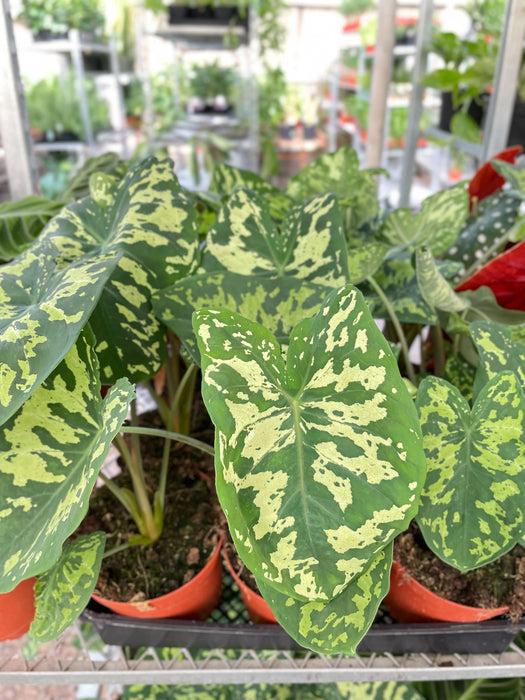
Alocasia Hilo Beauty is prized for its dramatic, camo-mottled leaves—broad, arrow-shaped blades splashed with chartreuse to creamy yellow on deep green. This clumping aroid forms upright petioles and lush, architectural foliage that reads modern and tropical at once. While commonly sold as an Alocasia, you may also see it labeled as Caladium praetermissum ‘Hilo Beauty’; regardless of the tag, care is the same: warm temperatures, bright filtered light, consistent moisture, and generous humidity. Flowers (a spadix with spathe) are rare and inconspicuous—the foliage is the star.
Suggested Uses
- Statement houseplant
- Bright, filtered-light rooms
- Shaded patio / lanai accent
- Mixed tropical containers
- Understory in frost-free gardens
- Office atriums with humidity
- Collector’s aroid display
Plant Details
-
 Botanical NameAlocasia ‘Hilo Beauty’ (syn. Caladium praetermissum ‘Hilo Beauty’)
-
 Common NameHilo Beauty Alocasia; Elephant Ear
-
 Size & GrowthIndoors 2–3 ft tall and wide; 3–4 ft in warm, humid, outdoor tropics; upright clumping habit
-
 Hardiness ZonesUSDA 9b–11 outdoors; grow as a houseplant elsewhere (protect from frost)
-
 Foliage TypeEvergreen in frost-free climates; large arrow-shaped leaves with bold green-and-cream mottling
-
 Bloom TimeSporadic in warm seasons; rare indoors; flowers are inconspicuous (spadix + spathe)
-
 Growth RateModerate to fast with warmth, bright filtered light, and high humidity; slower in winter
-
 Light RequirementsBright, indirect light; 2–4 hours gentle morning sun OK; avoid harsh midday sun to prevent scorch
-
 Attracts PollinatorsNot typically—grown for foliage; blooms are not showy to pollinators
-
 Indoor FriendlyYes—excellent houseplant when kept warm with steady humidity
-
 Container FriendlyThrives in containers with drainage; repot every 1–2 years as roots fill the pot
-
 Deer ResistantGenerally resistant due to calcium oxalate; browsing is uncommon but possible
-
 Pet WarningToxic if chewed (calcium oxalate crystals). Keep away from pets and children; sap may irritate skin
-
 FragrantNo fragrance—appreciated for variegated foliage, not scent
-
 Cut FlowerNot typical; leaves may be used briefly as foliage in tropical arrangements
-
 Grows Well WithGrows Well With Calathea/Goeppertia, Philodendron, Monstera, Colocasia, Ferns, Dieffenbachia, Pothos, Syngonium
Care Tips
-
 Planting InstructionsPlace in bright, filtered light. Use a pot 1–2 in wider than the root ball with drainage. Set crown level with soil; space 18–24 in apart outdoors. Acclimate to brighter light over 7–10 days.
-
 Soil MoistureKeep evenly moist but never waterlogged. Water when the top 0.5–1 in (1–2 cm) dries. Reduce watering 30–50% in winter/dormancy; empty saucers after watering.
-
 Soil TypeRich, airy mix: ~40% coco coir/peat, 30% perlite/pumice, 20% fine bark, 10% compost; pH 5.5–7.0. Add a little horticultural charcoal if desired.
-
 HumidityPrefers 60–80% RH. Use a humidifier or pebble tray; group plants. Provide gentle airflow to deter fungal issues and mites.
-
 Pruning InstructionsRemove yellow or damaged leaves at the base with sterile shears. Wipe dust from leaves monthly. Avoid cutting healthy green foliage.
-
 Winter CareKeep 65–85°F (18–29°C); avoid <60°F (16°C) and drafts. Provide 10–12 h of light. Hold fertilizer; water less. Bring containers indoors before nights drop below ~55°F (13°C).
-
 Planting DepthFor rhizomes, cover with 1–2 in (2.5–5 cm) of mix; for potted plants, keep at nursery depth with petiole bases above the soil line.
-
 FertilizationFeed spring–summer every 4–6 weeks with a balanced liquid (e.g., 3-1-2 or 20-20-20) at 1/2 strength, or use slow-release granules. Flush salts monthly.
-
 Special CareMonitor for spider mites, thrips, and mealybugs; treat promptly with insecticidal soap or neem. Rotate for even growth, stake if needed, and repot when rootbound. Avoid cold water and standing water; brighter light maintains variegation.