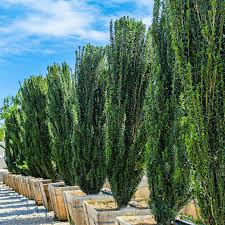


RedCrocus Sky Pencil Japanese Holly (Ilex crenata) – Narrow Columnar Evergreen for Hedges, Containers & Entryways – Live Plant 1 Gallon Nursery Pot
RedCrocus Sky Pencil Japanese Holly (Ilex crenata) – Narrow Columnar Evergreen for Hedges, Containers & Entryways – Live Plant 1 Gallon Nursery Pot
SKU:ber009b-redcrocus
Couldn't load pickup availability
Ilex crenata 'Sky Pencil'
 Evergreen Shrub
A strikingly narrow, columnar Japanese holly ideal for vertical accents, hedging, and containers.
Description
Compact | Architectural | Low-maintenanceIlex crenata 'Sky Pencil' is a distinctive, female cultivar of Japanese holly prized for its ultra-narrow, columnar habit. With small, glossy, dark-green evergreen leaves and a naturally upright form, it delivers a clean, architectural look without frequent pruning. Discreet white spring flowers can give way to small black berries in fall when a compatible male Japanese holly is nearby for pollination. Its tidy silhouette makes it perfect for tight spaces, entry flanking, and contemporary designs.
Suggested Uses
Landscape and container versatility- • Vertical accents for entrances, patios, and terraces
- • Narrow hedges, parterre geometry, or formal punctuation in mixed borders
- • Containers where ground space is limited; modern, minimalist designs
- • Foundation plantings; privacy screens in tight side yards
- • Japanese- and woodland-inspired gardens with acidic soils
Plant Details
Key attributes at a glance-
 Botanical NameIlex crenata 'Sky Pencil'
-
 Common NameSky Pencil Japanese holly
-
 Size & Growth6–10 ft tall (to 12 ft in ideal sites); 18–30 in wide; naturally tight columnar habit
-
Hardiness ZonesUSDA 6–9 (Zone 5 with winter protection and excellent drainage)
-
 Foliage TypeEvergreen; small, glossy, dark-green leaves, fine texture; no spines
-
 Bloom TimeLate spring; inconspicuous white flowers
-
 Growth RateSlow to moderate
-
 Light RequirementsFull sun to part shade (4–8+ hours of direct sun for densest habit)
-
 Attracts PollinatorsModestly attracts small bees to flowers; berries (if set) interest birds
-
 Indoor FriendlyNot recommended for long-term indoor culture; best outdoors
-
 Container FriendlyExcellent; choose a large, well-drained container to prevent tipping
-
 Deer ResistantGenerally deer-resistant but not deer-proof
-
 Pet WarningLeaves/berries may cause mild gastrointestinal upset if ingested
-
 FragrantNot notably fragrant (flowers very lightly scented)
-
 Cut FlowerNot typically used as a cut flower; stems can add structure in arrangements
-
 Grows Well WithGrows Well With Azaleas, camellias, hydrangeas, heuchera, hosta, Japanese maple, Nandina, ornamental grasses
Care Tips
Best practices for thriving plants-
 Planting InstructionsPlant in spring or fall in a hole 2–3× as wide as the root ball with the root flare slightly above soil grade; backfill with native soil improved with compost if needed; stake young plants in windy sites to maintain verticality.
-
 Soil MoistureKeep evenly moist, especially the first growing season; avoid waterlogged conditions—consistent moisture, not saturation.
-
 Soil TypeWell-drained, slightly acidic soils (pH ~5.5–6.5); loam or sandy loam preferred. Alkaline soils can cause chlorosis.
-
 HumidityHandles a wide range of outdoor humidity; in hot, dry spells increase watering and mulch to reduce stress and leaf scorch from wind.
-
 Pruning InstructionsMinimal pruning required. In late winter or early spring, lightly tip-prune to maintain a straight column; remove any splaying or crossing shoots. Avoid heavy shearing into old wood.
-
 Winter CareWater deeply before ground freeze and apply 2–3 in mulch. In colder/windy sites, wrap with breathable burlap or loosely tie to prevent snow/ice splay; ensure excellent drainage to prevent root rot.
-
 Planting DepthSet the crown/root flare 1–2 in above surrounding soil; do not bury the stem. Loosen or slice circling roots at planting to encourage outward growth.
-
 FertilizationFeed in early spring with a slow-release, acid-forming fertilizer for evergreens. Avoid late-summer applications. Address chlorosis with sulfur or chelated iron if pH is high.
-
 Special CareFemale cultivar; for berries, plant with a compatible male Ilex crenata nearby. Monitor for spider mites/scale in heat; prevent Phytophthora by ensuring sharp drainage, especially in containers.
Notes: Sizes and performance vary by climate and site. Always confirm soil drainage and pH before planting for best results.